
Email inboxes are crowded; this is not new news, but the stakes keep rising. We receive over 120 emails a day, most of which are ignored, deleted or sent to spam. Yours is competing with all of them.
Let’s put a number on the pain. According to Litmus, the average business loses somewhere between 20–40% of potential revenue from email marketing simply by sending the right message to the wrong people at the wrong time. It feels like a technical problem, so you keep tweaking the tech. But the real issue sits one level up.
Why email marketing performance depends on strategy, not just data
Most businesses are excellent at sending emails (hold that thought, everyone can send an email… ), but what we see is that businesses are actually weak at thinking about emails, and yes, there is a crucial difference! It is the difference between having data and using it strategically.
So why are my emails underperforming despite having good data?
What is ironic is that more data often makes things worse. You have lots of signals, it’s tempting to over-segment and automate without ever stepping back and asking “What do our customers actually need to hear right now, and why would they care?”
Strategy has to come before technology always! Your CRM platform is a tool, not a tactic.
Email marketing benchmarks you should look at for your business
Before you overhaul everything, it helps to know where you stand. Here are the benchmarks most email marketers are measured against in 2025:
| Metric | Industry average | Good performance |
| Open rate | 21–28% (inflated by Apple MPP*) | 35%+ |
| Click-to-open rate | 10–15% | 20%+ |
| Unsubscribe rate | 0.2–0.5% | Below 0.2% |
| Conversion rate | 1–3% | 4%+ |
| Deliverability rate | 95% | 98%+ |
*A quick note on open rates: since Apple’s Mail Privacy Protection (MPP) launched, open rate figures have been artificially inflated because Apple pre-loads emails before a human actually opens them. This means click-to-open rate (CTOR) is now a more reliable measure of true engagement, it tells you what percentage of actual openers clicked something, which is a much truer signal of content quality!
If your open rate is healthy but conversions are low, the problem is your content or offer, not your subject lines. If your open rate is low, the problem is usually list quality, segmentation, or sender reputation.
Reasons why your email campaigns are underperforming
If your emails aren’t working, this could be why. It’s not always what you send, it’s how you send it.
Your segmentation is too basic
Sending emails to the wrong people, engagement will drop, and your sender reputation will suffer.
WeDoCRM recommends:
Segment your audience using behaviour and intent (e.g. purchase history, browsing activity, engagement levels). Focus on sending fewer, more relevant emails to the right people.
Your automations haven’t been updated
What worked before no longer fits your offers or audience. Flows that made sense 18 months ago are now out of sync with your offers. Stale automation is worse than none.
WeDoCRM recommends:
Audit your automations regularly. Update messaging, timing, and triggers to reflect current campaigns, products, and customer behaviour.
You’re testing tactics, not the strategy
Changing your email subject line by adding different emojis is not good enough; if the message, timing and audience are wrong, it’s a waste of time.
WeDoCRM recommends:
Try stepping back and reviewing the full journey. Try testing bigger changes like audience targeting, messaging, and send timing.
Personalisation stops at ‘first name’ and irrelevant content
“Hi [FirstName]” isn’t personalisation, it’s mail merge. Without behavioural and purchase data shaping content, your emails feel generic to everyone who reads them.
WeDoCRM recommends:
Use behavioural and purchase data to personalise content, recommend products, tailor messaging, and align emails to where the customer is in their journey.
Mobile Unfriendliness
Over 60% of emails are opened now on mobiles. If your design doesn’t fit or look good on mobiles or iPads, users are going to delete it in seconds.
WeDoCRM recommends:
Keep subject lines and the copy short. Always test emails across different devices before sending because if it’s not easy to read and click on a mobile, they won’t perform.
Outdated/inactive users and bought lists
We helped a client recently who used purchased, non-permission-based lists. This kills conversion rates and leads to high spam.
WeDoCRM recommends:
We focused on quality over quantity for our client. Cleaned their database and removed inactive users and avoided bought lists entirely! It is so much better to build your audience through genuine opt-ins and re-engagement campaigns to improve overall performance.
Examples of good email campaigns
Here are some really good email campaigns that focus on personalisation that can really work in practice, using real customer behaviour and data to create emails that feel relevant, timely, and genuinely tailored to each person.
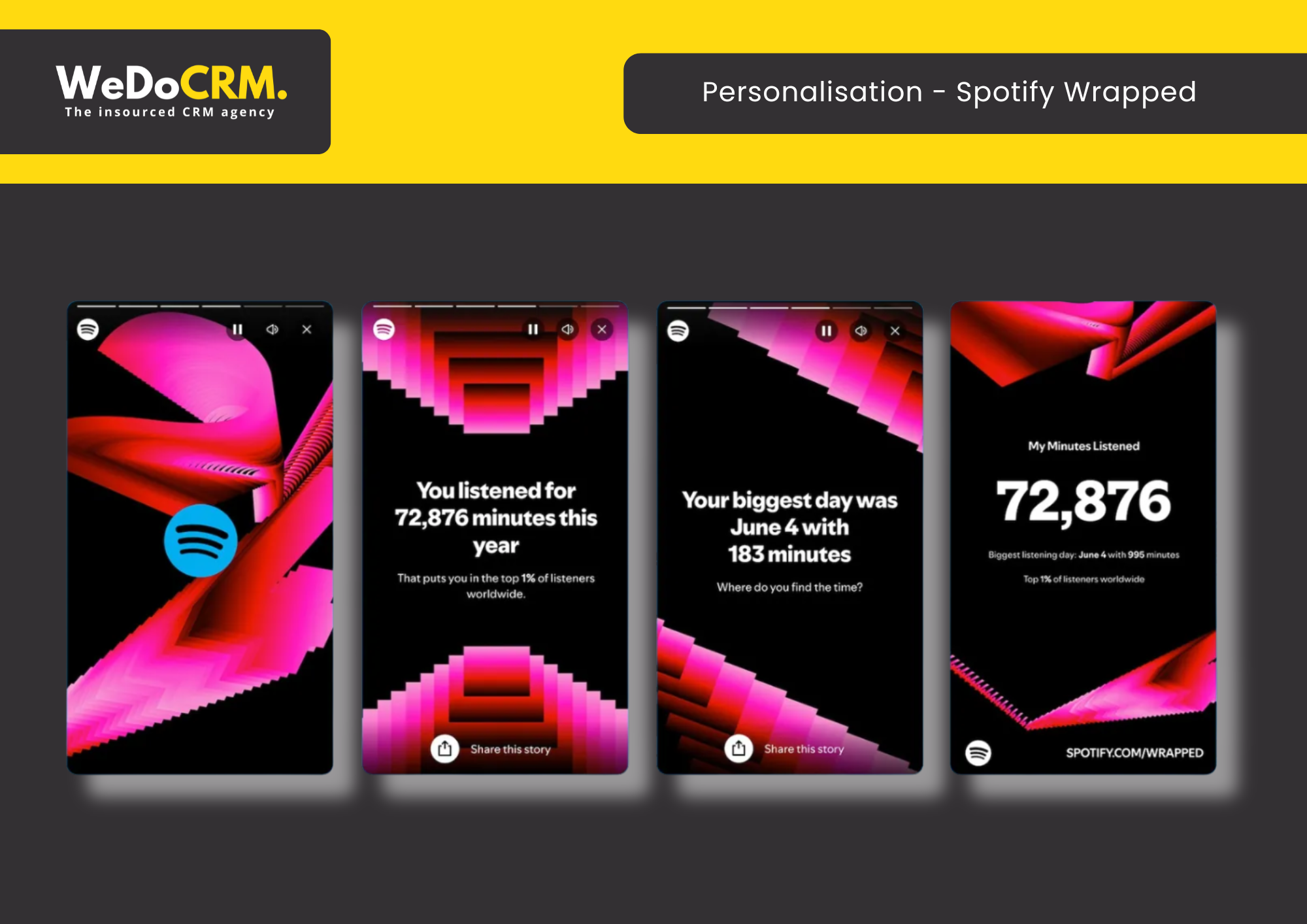
Spotify Wrapped
A great example of effective personalisation is Spotify Wrapped. It works so well because it uses real behavioural data (what users actually listen to) to create content that is unique to the person and super relevant! It tells a story tailored to each individual.
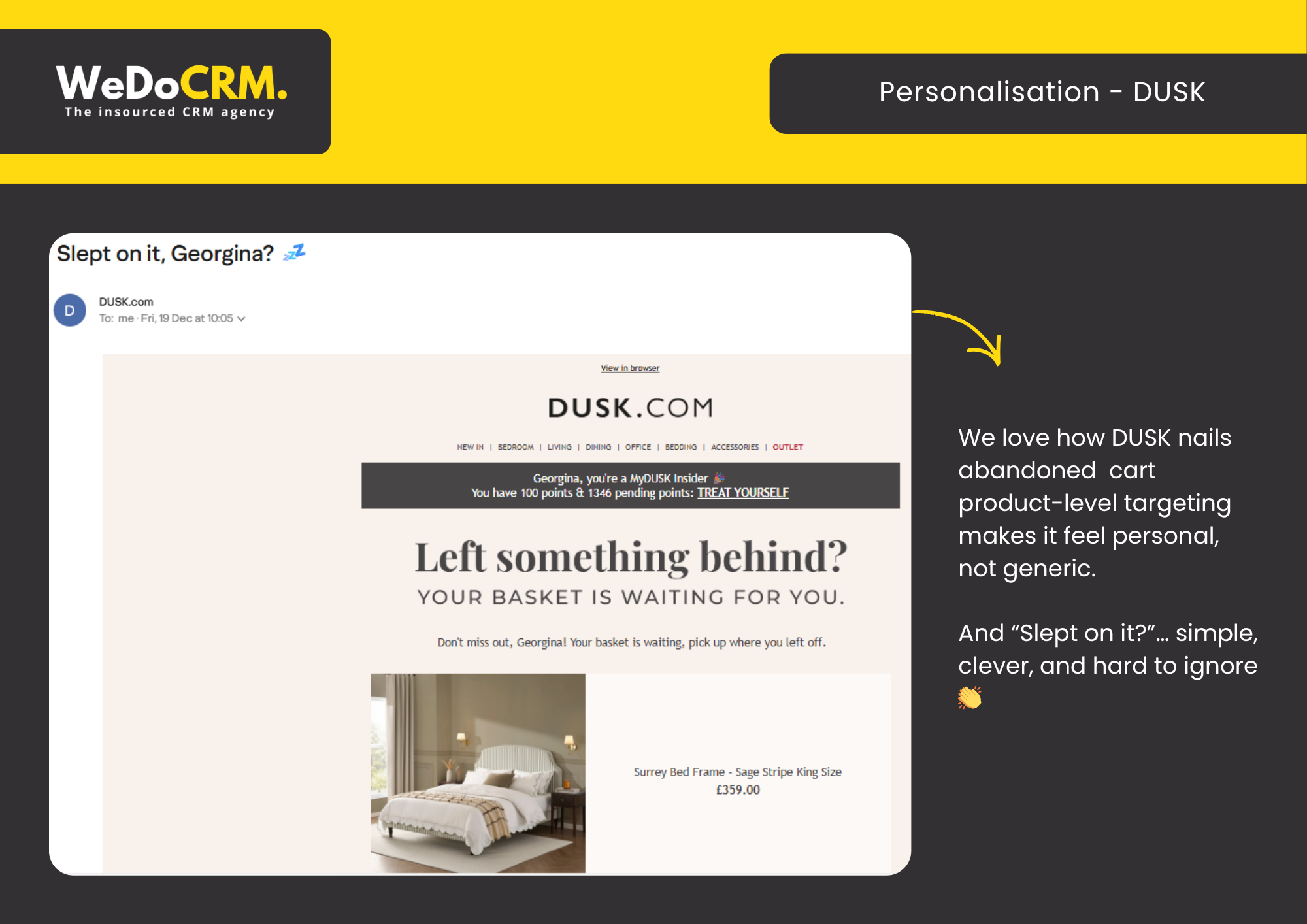
DUSK – Sleep On it
We love how DUSK has approached their abandoned cart strategy by segmenting emails based on the specific product left behind. It makes the messaging feel far more relevant and tailored, rather than generic. The subject line “Slept on it?” is a great touch too, simple, clever, and perfectly aligned with the brand, making it much more likely to grab attention and drive engagement.
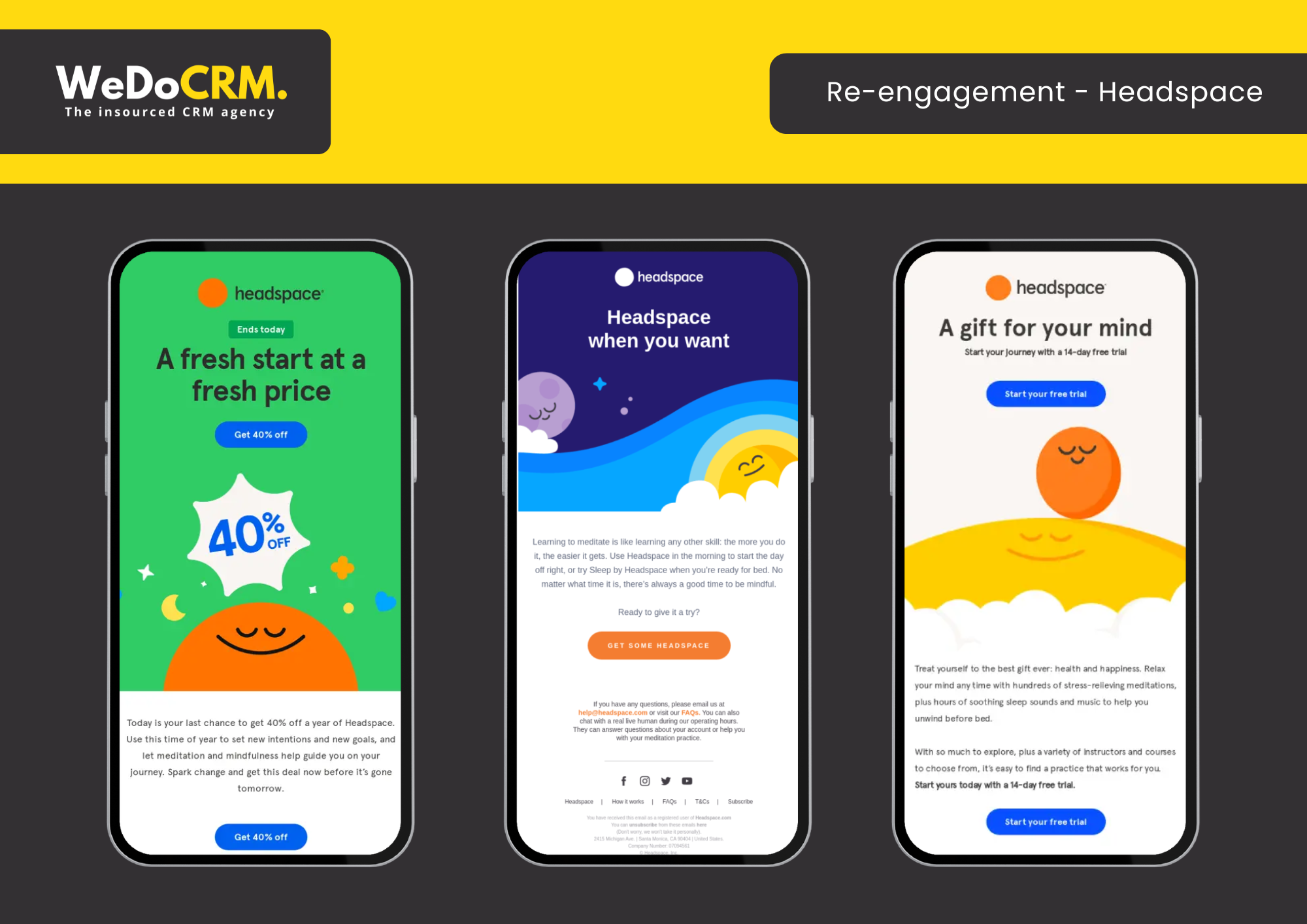
Headspace – Re-engagement Emails
Headspace uses thoughtful, personalised re-engagement emails with a supportive tone to bring users back in a calm, human way. These are great examples of tone of voice and lifecycle journeys that are tailored to the user’s inactivity or mood.
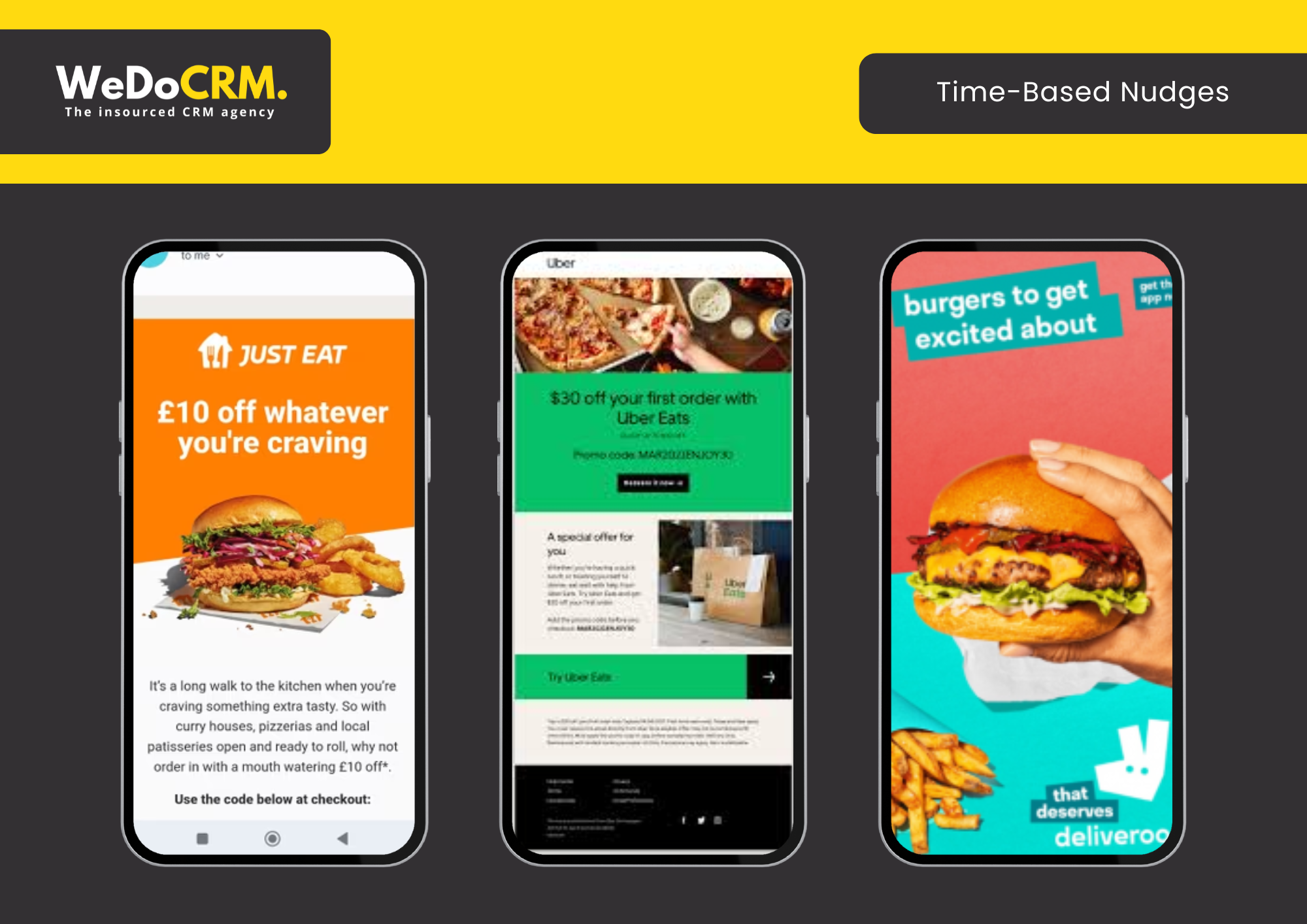
Uber Eats, JustEat & Deliveroo – Time-Based Nudges
“It’s dinner time” or “Your usual?” Uber Eats uses timing and past behaviour to send habit-based emails that feel relevant to the moment. We love these habit nudges. They are relevant to the user.
How WeDoCRM helps businesses fix underperforming email campaigns
We’re a CRM agency and a damn good one at that. That means we don’t dabble… email strategy, automation, and CRM optimisation is all we do.
Here’s what working with us typically looks like:
Email audit: We start by reviewing your current campaigns, flows, segmentation, and attribution setup. Most clients discover they’re leaving 30–50% of potential email revenue on the table before we’ve changed a single thing.
Read more here: WeDoCRM x Email Audits
Segmentation and data strategy: We work with your existing CRM data to build meaningful audience segments based on behaviour, lifecycle stage, and purchase history, not just demographics.
Read more here: WeDoCRM x Email Marketing
Automation rebuild or optimisation: We audit every active flow and either update it to reflect the current strategy or rebuild it from scratch. This includes welcome sequences, abandoned cart, post-purchase, win-back, and browse abandonment flows.
Read more here: WeDoCRM x Email Design and Rebuild
Ongoing optimisation: Email isn’t a set-and-forget channel. We run a structured test-and-learn programme across all active campaigns, testing audiences, offers, timing, and content, so every send improves on the last.
We’ve helped businesses in e-commerce, SaaS, hospitality, and professional services turn underperforming email channels into one of their most reliable revenue streams.
Get in touch with us. We look forward to hearing from you!
sales@wedocrm.co
Frequently Asked Questions – Email Campaigns Underperforming
Why are my open rates declining even though my list is growing?
Just because your list may be growing, doesn’t mean it will be the same for engagement. If you have declining open rates its usually a sign that segmentation hasn’t kept pace with your list growth. Sending the same content to everyone tends to dilute relevance, so send smaller, better-targeted sends.
What’s the difference between email automation and email strategy?
We tend to say that automation is the mechanism, and strategy is the thinking behind it. You could have perfectly functioning automated flows that send the completely wrong message to the wrong people. Strategy defines the who, what, when and why; automation just delivers it at scale.
How long does it take to see results from improving email strategy?
Quick wins (segmentation, suppression, basic A/B testing) often show measurable improvement within 2–4 weeks. Full automation rebuilds typically show material revenue impact within 60–90 days. Attribution improvements help you see results you were already generating but couldn’t previously measure.
Is email marketing still worth investing in?
Yes! Email remains one of the highest-ROI digital channels with £36–42 return per £1 spent when done correctly. The businesses that claim “email doesn’t work anymore” are usually the ones running batch-and-blast strategies that made sense in 2012.
Why isn’t personalisation working in my emails?
Basic personalisation, like using a first name, isn’t enough. Without using behavioural or purchase data, emails can still feel generic and fail to connect with the reader. Take a look at the examples above, such as JustEat and Spotify.
Why are my open rates okay, but conversions are low?
This usually means your subject lines are working, but your content, offer, or call-to-action isn’t strong or relevant enough to drive action.
Want more of our insights? Check out:
- Make Your CRM Budget Work Harder This Financial Year – Tips from our CEO
- Why Businesses Are Exploring Alternative CRM Platforms – What CRM Platform is best for you?
- Email Marketing Trends – Find out about the latest trends