
Welcome to the “here and now” of top CRM platforms that are expected to sit at the core of your entire business, holding hands with sales, marketing, service and leadership with real intelligence and AI that actually does something useful. Let’s talk about it!
We’ve thought long and hard about which platform will still be pulling its weight five years from now. Could it be Salesforce? Could it be HubSpot? Iterable? Pipedrive? Well, between you and us… with any of those, you can’t really go wrong; they are all great in growing your biz without quietly falling apart at the seams.
What actually separates the genuinely great from the impressively mediocre? What should you actually care about, and why are the goalposts moving so fast? Drum roll please…… Yes, we are going to tell you!
What Should a CRM Platform Do in 2026?
We see businesses juggling more channels, touchpoints and customer expectations than ever before (oh, and the pace isn’t slowing down by the way!) What felt cutting edge, three years ago, feels slow, needy and reliant on someone actually manually typing things in… not exactly a great way to gain competitive dominance.
Your CRM platform needs to have all of the wonderful things below:
- AI (of course)
- Data that actually gets used
- Everything connected, nothing siloed
- Automation that handles the boring stuff
- Omnichannel outreach (but properly managed!)
- Prediction, not just reporting
- Full mobile functionality
A great CRM platform now should make your team faster, your customers happier, and your pipeline a lot less dependent on gut instinct and good luck. If yours isn’t doing that, keep reading.
If you didn’t already know, AI is a big deal.
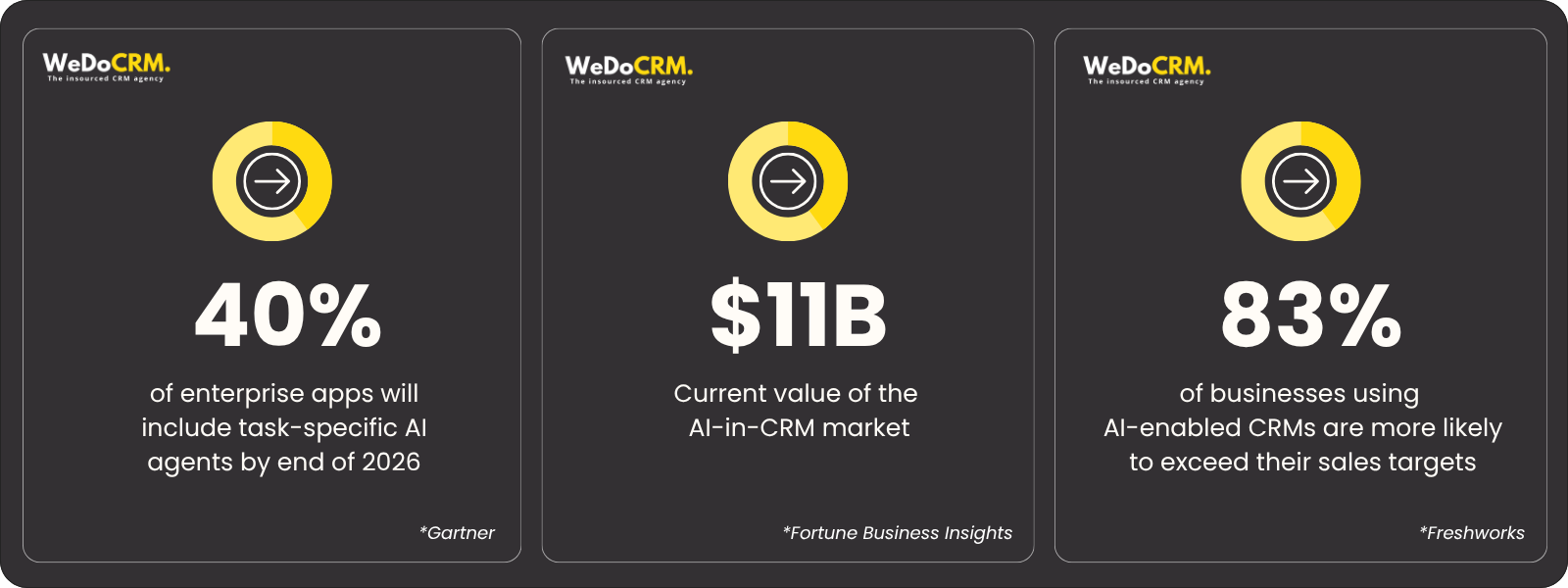
Gartner predicts that 40% of enterprise apps will include task-specific AI agents by the end of 2026. That’s a lot of ground covered in a very short time.
We’re talking AI that drafts your emails, summarises calls, waves a red flag at deals that have gone cold, and quietly tidies up your duplicate records while you’re in yet another meeting. The AI-in-CRM market is already valued at around $11 billion. (Which tells you everything you need to know about where the industry has decided the future lives!)
So with that, here are the 5 CRM software trends defining 2026 and beyond. It’s very exciting!
2026 CRM Software Trends
There are quite a few new CRM and AI trends popping up right now, and we think they’re quickly becoming implemented into day-to-day work life.
| Trend | What’s happening | Business impact |
| Agentic AI takes over execution | AI moves from assisting to actually doing CRM work (updates, routing, follow-ups, summaries) | Faster execution, less manual CRM work, but a stronger need for governance |
| Buyers go self-directed | Most buyers research, shortlist, and evaluate before speaking to sales | CRM must capture intent early or lose pipeline visibility |
| CRM becomes one shared system | Marketing, sales, and success finally operate from a unified lifecycle model | Better forecasting, smoother handoffs, fewer internal silos |
| First-party data becomes critical | Businesses rely on owned, consented data instead of external sources | More accurate targeting, better compliance, stronger personalisation |
| AI governance becomes standard | AI decisions in CRM must be explainable, logged, and reviewable | Safer AI adoption, slower chaos-driven automation, and higher trust |
| CRM becomes revenue intelligence | Forecasting shifts from static pipeline data to behavioural + usage signals | Earlier churn detection and more accurate forecasting |
| Omnichannel becomes truly unified | Every touchpoint (web, email, product, support) feeds one continuous customer view | Better attribution, smoother journeys, higher conversion rates |
| CRM becomes modular and connected | Platforms shift from monoliths to API-first, composable ecosystems | More flexibility and scalability, but higher integration complexity |
The 5 CRM Software Trends Defining 2026
Here are, in our opinion, just the five shifts that are genuinely changing what good CRM looks like this year.
1) AI is promoted from being a glamorous assistant
For the last two years, AI in CRM has meant smarter suggestions, whether that be a recommendation here or a sentiment score there; it’s helpful, but it’s mostly basic. We’re in the era now of what we call “Agentic AI”, where systems that have it don’t just suggest actions, but they complete them..
(Oh, look at this glamorous assistant! Image of course made with AI)

You can read our blog where we wrote in detail about agentic AI here:
→ Agentic AI in Marketing and CRM
What does this look like in practice?
An AI agent reads an email from a prospect that mentions budget approval. This is then automatically updated on the deal stage, a follow-up task is scheduled, and the account manager is alerted. Oh, and it’s all without a human touching the CRM platform. (Imagine all that time you can spend making more coffee, or actually be able to drink a coffee that is still warm!) It’s a framework that has been tested for leads, renewals, etc., and by the end of this year, we can almost guarantee that platforms will offer this native agent tool as part of their standard packages.
WeDoCRM Recommendations:
- Audit your CRM data before enabling AI features
- Map which tasks could be automated in your pipeline (lead scoring, follow-up sequences, deal stage updates)
- Start small, for example, one automated workflow done well is worth more than ten half-working ones
- Build in human review checkpoints, ‘approved autonomy’ beats blind automation every time
You can read more about CRM audits here:
→ How to Audit, Clean, and Maintain your CRM Database
2) Buyers Prefer a Rep-Free Buying Experience
61% of B2B buyers now prefer a rep-free buying experience. In B2B, this used to be rare; big purchases always meant a salesperson walked you through it. Now buyers actively avoid that.
The shift in buyer behaviour isn’t new, but what is new is that CRM platforms can finally do something meaningful about it.
Until recently, capturing intent signals meant stitching together three or four separate tools, let’s say… a marketing automation platform, a CDP, a website analytics layer, and then hoping your CRM synced with all of them. In 2026, that’s changing.
Platforms like HubSpot, Salesforce and Pipedrive now offer native intent data, real-time website visitor tracking, and AI-powered engagement scoring built directly into the CRM, no third-party patchwork required.
That’s the trend: intent-aware CRM. The ability to see, score, and act on buyer behaviour within your CRM platform, before a prospect ever identifies themselves.
What you can do about it:
- Map all digital touchpoints into your CRM (website, downloads, email, events)
- Use intent-based lead scoring, not just demographics
- Build separate nurture journeys for early-stage vs high-intent leads
- Train sales teams to tailor outreach to buyer stage and intent
3) Your Marketing, Sales and Customer Success Teams Are Working Differently
Systems aren’t just being judged on what they can do anymore, they’re being judged on how smartly they connect the dots and turn information into action.
Nobody is being incompetent. The problem is that each team is working from their own system, their own data, and their own version of what’s happening.
Marketing has its tools. Sales has the CRM platform. Customer success has the support desk. However, none of them talk to each other properly. So by the time a customer actually gets an answer, it’s gone on such a journey through different systems that it probably qualifies for air miles!
What to do about it:
- Count how many systems currently hold customer data in your business. If it’s more than one, you have a problem worth fixing.
- Get marketing, sales and customer success in a room and agree on shared definitions – what is a lead? What is a qualified opportunity? What does a successful handoff look like?
- Build those handoff points into your CRM as actual steps, not just an email chain and a hope
- Appoint someone to own the CRM across all three teams. Without clear ownership, nothing stays consistent
If this sounds familiar, we wrote an article about how CRM can play an important role in MarTech stacks and examples on how to build one!
→ Building The Ultimate MarTech Stack For Your Business
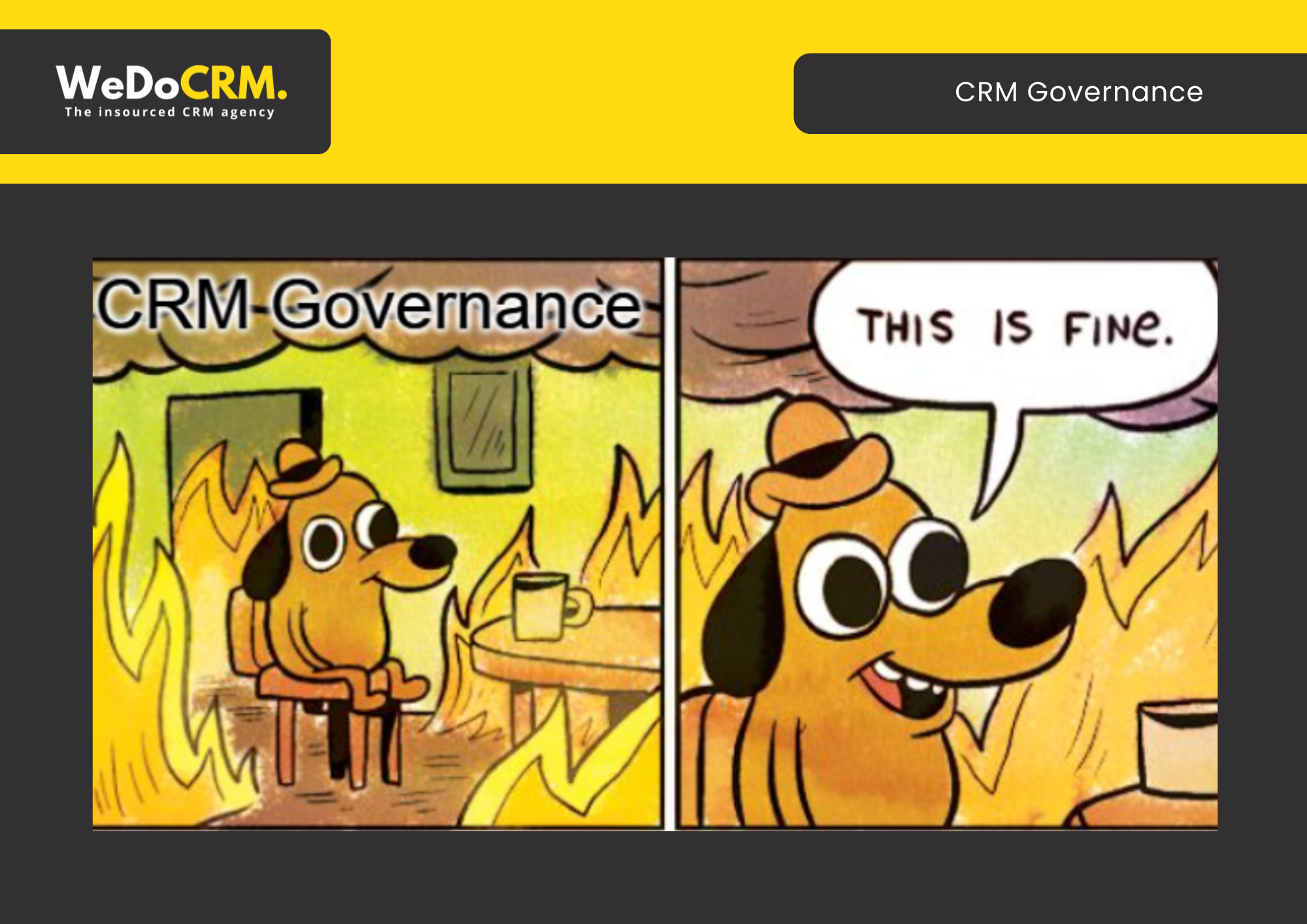
4) CRM Governance and AI Transparency Become Non-Negotiable!
This one doesn’t get enough airtime in trend roundups, but it matters. Nobody gets excited about governance, but the EU AI Act is now in full force. There’s no “we’ll sort this compliance stuff later”, it’s now a legal requirement to show your working. (Not us getting flashbacks to GCSE mathematics where the answer wasn’t enough and you had to show your working!)
If your CRM platform uses AI to make decisions that affect people (so that is lead scoring, automated outreach, customer segmentation), you now need the documents of how those systems work and have humans built into the process!
In practice, that means knowing:
- What data is your AI using to make decisions
- What those decisions actually are
- A human can step in and override them if needed
WeDoCRM Recommends:
Our recommendation is simple: build a “confirm or cancel” step into your AI automations. The AI does the thinking, a human gives the nod. That way, your team stays in control, and they gradually build confidence in what the AI is doing.
Governance done right isn’t a handbrake on innovation. It’s what lets you scale it without things catching fire.
5) Third-party data is dying. Here’s why that matters for your CRM
Third-party data… So those lists of contacts, cookies tracked, data from ad platforms, you know, the cheap, easy and reasonably effective data you got? Say goodbye!
Privacy laws, browser changes and cookie deprecation have made that outside data so unreliable. You are playing for information that is out of date and legally questionable. Businesses have relied on this for years!
Now we have the alternative new guy on the block, first-party data, and yes, it’s exactly what it sounds like. Data you collected yourself from people who chose to give it to you, email sign-ups, form submissions, purchase history and website behaviour from those who logged in or consented to tracking. It’s yours, it’s accurate, and no one can take it away from you!
What to do about it:
- Audit where your CRM data actually comes from, how much of it did you collect directly, vs. buy or pull from third parties?
- Make every owned touchpoint work harder (your website, emails, events, and sign-up forms should all be feeding clean data directly into your CRM)
- Make sure your consent and tracking setup are solid, data is only valuable if it’s legally collected
How Ready Is Your CRM for 2026?
Be honest with yourself here. Tick the ones that are genuinely true, not “sort of true,” not “we’re working on it,” not “that’s on the roadmap.”
Actually true:
- Our CRM data is clean, consistent, and regularly maintained
- Our sales team logs activity in the CRM within 24 hours, every time
- Marketing, sales, and customer success share one agreed-upon definition of a qualified lead
- We have intent data flowing into our CRM from our website and content — not just form submissions
- Our email sequences genuinely branch & provide dynamic content and messaging, based on prospect behaviour, not just timings
- We have a named person responsible for CRM governance and data quality
- Every AI automation in our CRM is documented and has a human review checkpoint
- Our pipeline stages reflect how our buyers actually make decisions — not just how we like to sell
- We can run a reliable revenue forecast from CRM data alone, without a gut-feel adjustment
- Our customer success team uses the same CRM as sales — not a separate tool with separate data
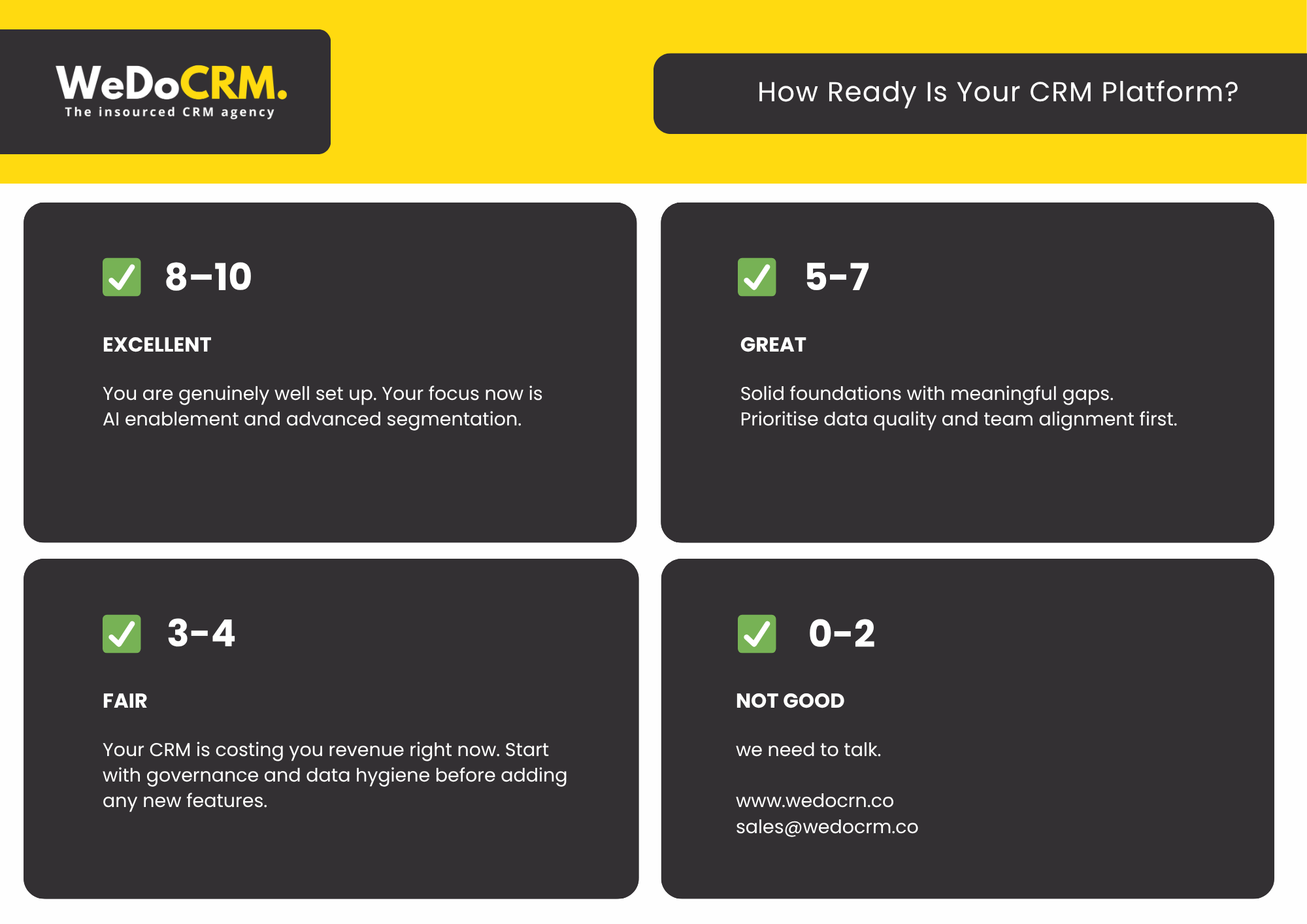
8–10 ✓
Genuinely well set up. Your focus now is on AI enablement and advanced segmentation.
5–7 ✓
Solid foundations with meaningful gaps. Prioritise data quality and team alignment first.
3–4 ✓
Your CRM is costing you revenue right now. Start with governance and data hygiene before adding any new features.
0–2 ✓
We need to talk. Genuinely.
Free 30-minute CRM health check
Not sure where your gaps are? WeDoCRM offers a free 30-minute CRM health check. We’ll give you an honest view of where your setup is strong and where it’s quietly leaking revenue. You can go away from the call with insights and advice on where to start.
How to Stay Ahead: The CRM Competitive Edge
Most of your competitors are doing the same things with their CRM platforms that they were doing two years ago. They’ve added a few AI features, cleaned up their pipeline stages once, and called it a day. The bar for competitive advantage in CRM is not as high as you might think!
Here are some of the things you can do in the next 30 days to get up to speed!
- Run a CRM data audit and fix your top three data quality issues (even small improvements here unlock significant gains downstream)
- Switch on website visitor tracking if you haven’t already (free versions of tools like Leadfeeder or HubSpot’s native tracking give you immediate intent visibility)
- Document every AI automation currently running in your CRM. (If you can’t explain what it does in two sentences, neither can your team.)
How WeDoCRM Can Help You
Most CRM problems aren’t complicated. They’re just unaddressed. The businesses we see doing well at the moment aren’t necessarily using more sophisticated technology, they’re just using what they already have more intelligently!
WeDoCRM works with B2B businesses to build CRM strategies that actually generate revenue from data audits and pipeline design through to AI enablement and full RevOps restructures.
We would love to hear from you! Get in touch with us.
Frequently Asked Questions: CRM Software Trends in 2026
What is the biggest CRM trend in 2026?
In our opinion, it has to be Agentic AI. Systems that take actions autonomously rather than just making suggestions. This includes automatic data entry, deal stage updates, follow-up scheduling, and lead routing. It’s a significant shift from AI as a helper to AI as an operator within your sales process.
Is AI in CRM actually worth it for small and mid-sized businesses?
Yes, yes and yes again with a capital Y.E.S: The main thing to watch out for, though, is that AI is only as good as the data it works with. Businesses that invest in clean, structured CRM data before enabling AI features see measurable gains. Those that bolt AI onto a messy system end up automating chaos. Start with data quality.
Is my CRM strategy failing?
Common signs that your CRM strategy is failing include: your sales team uses spreadsheets alongside the CRM, your pipeline stages don’t reflect how buyers actually decide, your marketing and sales teams define ‘qualified lead’ differently, and you can’t produce a reliable revenue forecast from CRM data alone.
What should I prioritise? A new CRM feature or fixing existing ones?
Fix what you have first. New features built on a messy foundation don’t work. Prioritise data quality, user adoption, and clear ownership before adding AI tools, advanced automation, or new integrations. The order matters.
How often should we review our CRM setup?
At a minimum, quarterly. Things change. Your team grows, your sales process evolves, and new features get released. A quarterly review should check: is the data still clean, are the automations still working as intended, are the pipeline stages still reflecting how deals actually move, and is there anything the team has stopped using that needs fixing or removing?
Want to know more? Read more of our insights:
- SME CRM Solutions – Find out the best solutions for you
- How SMEs Can Compete with Bigger Brands – The best tips to compete with bigger brands
- Create a CRM Strategy – Find out how to create a CRM strategy for your small business