
The Most Common CRM Problems and How to Fix Them
Let’s talk about CRM problems. Most CRM projects start with big dreams and thoughts that it’s going to be the thing that solves everything. But somewhere between the implementation and reality, things go slightly… sideways. Captain, iceberg ahead!
A CRM is not a “set it and forget it” tool. The scary part of it all is that most businesses don’t realise how much money these little CRM problems are costing them. Before long. The system that was meant to make everyone more proactive has become a very expensive digital junk drawer – ouch. Yeah, we said what we said. It matters even more when you consider the scale of investment in this space – the global CRM market was valued at $58.8 billion in 2022 and is expected to reach $163.16 billion by 2030. That kind of growth shows just how critical CRM has become to modern business success. (Source: Market Research)
Some might think a CRM migration is the answer, it might well be! But before you jump into shiny new tech, Is your current CRM actually failing… or is it just being used badly?
It’s not about just adopting new technology; it’s about owning it. The CRM trends are getting cooler and cooler. You can read about them and get a head start in our blog: Hottest CRM trends for 2026 – these are the trends you’re going to bet on because they’re sticking around.
The 8 Most Common CRM Problems
Don’t let your CRM dreams fall flat. Here are the common CRM problems we see all the time, what they’re costing you, and how to fix them (with advice from our CRM geeks – sorry, we mean our highly professional CRM team).
| CRM Mistake | The Problem | Quick Fix |
| Data Quality | Dirty, duplicated, unreliable data | Assign ownership, audit the CRM, and add validation rules |
| Segmentation | Sending everything to everyone | Segment customers and personalise messaging |
| Automation | Old automations running unchecked | Review, clean up, and regularly update flows |
| Reporting | Tracking opens instead of outcomes | Measure revenue, retention, and customer value |
| Consent & Preferences | Broken preference centre | Make preferences easy to access and update |
| Alignment | Sales and marketing overlap | Use shared communication rules and visibility |
| Governance | Nobody understands the CRM setup | Document fields, segments, and automations |
| Customer Experience | Over-messaging and low relevance | Send fewer, more targeted messages |
1) Data Quality – Your Data is Dirty, and Nobody Owns It
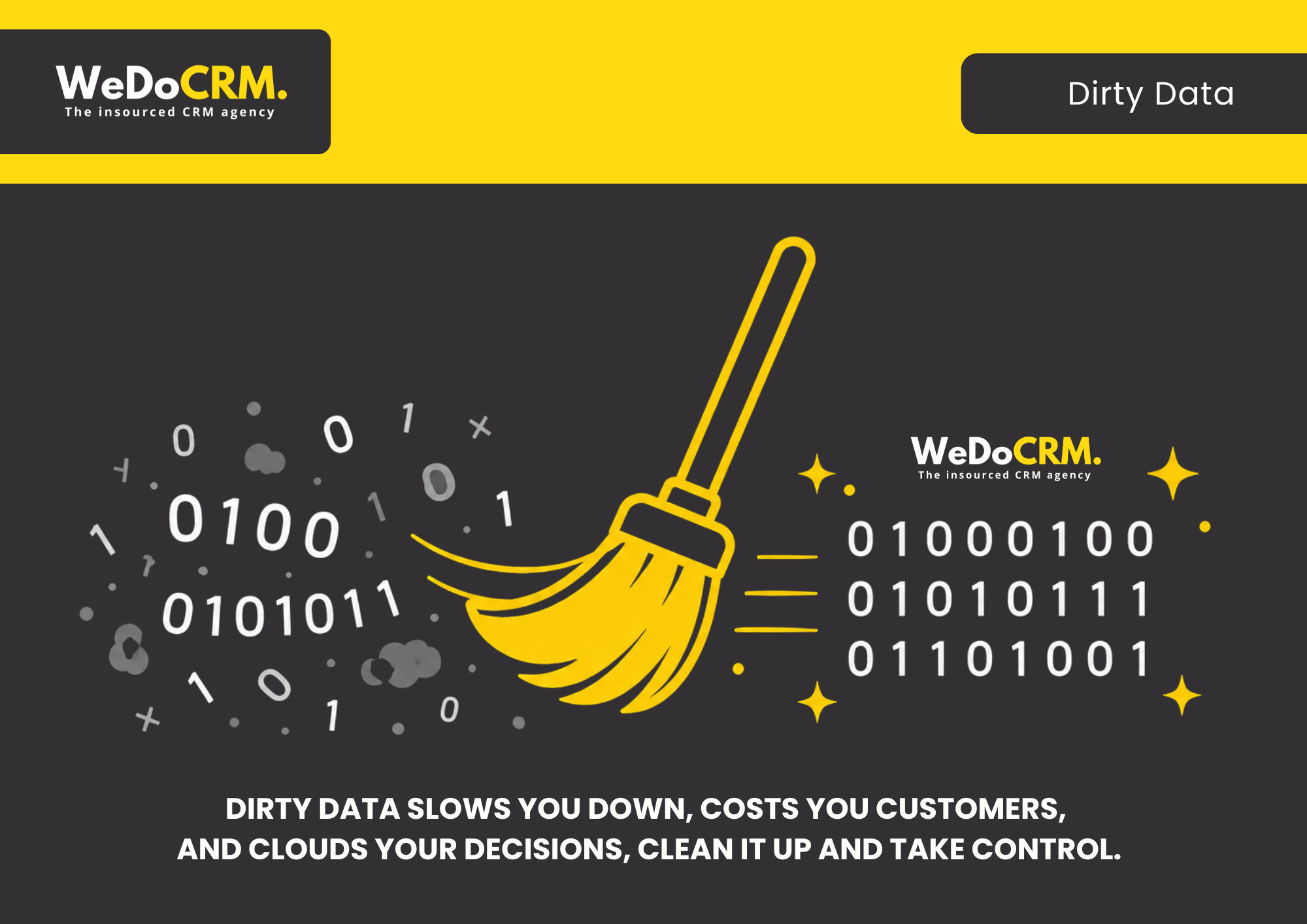
The Problems
- Duplicate records start piling up
- Email addresses go stale
- Naming conventions become inconsistent
- Reports become unreliable
- Campaign targeting gets weaker
- Decisions are made using incomplete information
- Poor data quietly spreads across the entire platform
With data, because it degrades slowly, most teams don’t notice until the damage is significant.
How To Fix It – Step By Step
- Give someone ownership of the data
- Audit your CRM and spot the issues
- Find out where bad data is creeping in
- Add validation rules to stop it from getting worse
- Clean your most important records first
- Keep naming and processes consistent
- Check data quality regularly
Small changes now = fewer headaches later.
Read our full guide on how to run a CRM data audit and spot the issues quietly hurting your reporting, campaigns, and customer experience. 👇
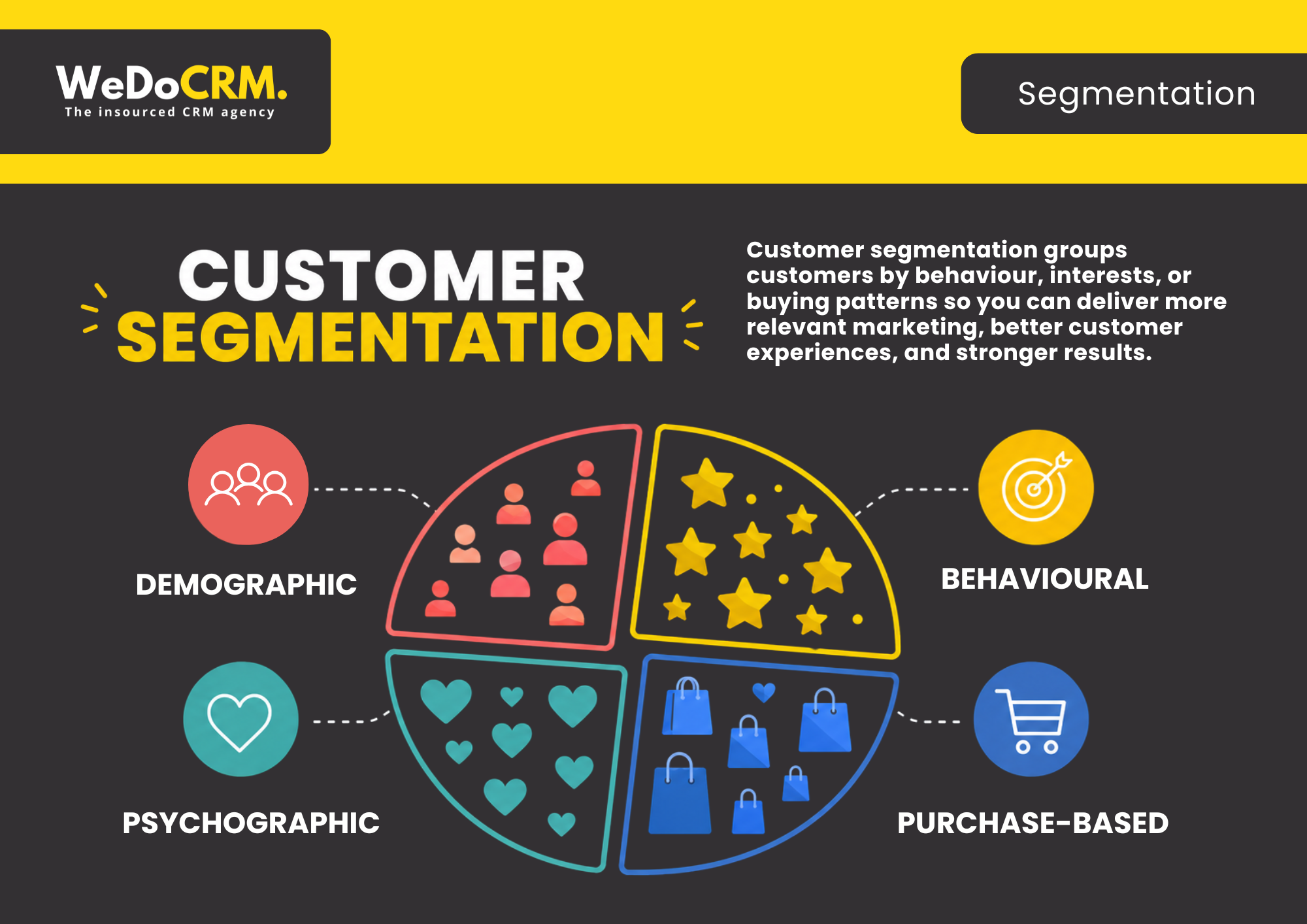
2) Segmentation – You’re Sending Everything to Everyone
The Problems
Batch-and-blast feels efficient, but trust us – It isn’t!
- Sending the same message to everyone feels efficient – but it rarely works
- Customers at different stages need different conversations
- Engagement drops when emails feel generic
- Unsubscribes rise
- Loyal customers end up being treated the same as cold leads
- Mass sends damage to the customer experience over time
- More emails doesn’t always mean more revenue
How To Fix It – Step By Step
- Start by segmenting your audience – active, lapsing, dormant, etc.
- Stop sending the same message to everyone
- Focus on relevance over reach – smaller, more targeted campaigns
- Personalise based on behaviour – history, engagement or lifecycle stage
- Track engagement, unsubscribes, and revenue per send
Want to move beyond batch-and-blast marketing? Read our practical guide to CRM segmentation and learn how to send more relevant campaigns, improve engagement, and turn customer data into smarter marketing. 👇
→ How to Segment and Target Your Customers through CRM
3) Automation – Your Automations Were Set Up Once and Never Touched
The Problems
Those “Set and forget” automation usually creates more problems later, guys. CRM automation should evolve just as your business evolves! Those emails are still reaching your customers and making impressions… just bad ones.
- Old automations often get forgotten about
- Welcome flows written years ago are still running
- Outdated offers keep getting sent to customers
- Nurture sequences become stale over time
- Customers end up receiving irrelevant messaging
- First impressions suffer without anyone noticing
How To Fix It – Step By Step
- List every live automation currently running
- Review the copy and customer journeys
- Remove anything outdated or irrelevant
- Check triggers and exit criteria still make sense
- Keep only the flows that are adding value
- Document what each automation does
- Schedule regular reviews so nothing gets forgotten
Treat flows like a live product, they need maintenance, not just monitoring.
Want to get more from your CRM automation? Read our guide on how smarter customer journeys lead to better engagement, stronger retention, and more revenue. 👇
→ Why CRM automations are key to successful segmentation
4) Reporting – You’re Measuring Opens and Clicks, not Outcomes
The Problems
A campaign with a 48% open rate and zero downstream revenue is a failure. A campaign with a 14% open rate that drives £22,000 in repeat purchases is a success. If your CRM reporting doesn’t connect to revenue, retention, or a specific commercial behaviour, we hate to tell you this… but you’re optimising for the wrong things.
- Open rates don’t always mean success
- High engagement means nothing without revenue behind it
- Vanity metrics can hide poor campaign performance
- A lower open rate with strong conversions is far more valuable
- CRM reporting should connect to revenue, retention, and behaviour
How To Fix It – Step By Step
- Start tracking business outcomes – not just opens and clicks
- Measure revenue generated through CRM activity
- Monitor repeat purchase rate by customer segment
- Track churn and customer retention trends
- Review customer lifetime value over time
- Build reports around commercial impact
- Use the data already sitting inside your CRM
5) Consent & Preferences – Your Preference Centre is Broken
The Problems
- Customers struggle to find the preference centre
- Preference updates don’t always save properly
- Opt-down choices get lost over time
- Customers keep receiving communications they tried to limit
- Broken preference centres create compliance risks
- Poor experience damages customer trust
How To Fix It – Step By Step
- Make your preference centre easy to find
- Let customers update preferences without logging in
- Keep preferences synced across every channel
- Make sure changes save properly every time
- Give customers clear control over what they receive
- Regularly test the experience from a customer perspective
The easier it is for customers to manage preferences, the more likely they are to stay engaged. Treat preference management as part of customer experience, not just compliance.
6) Alignment – Sales and Marketing are Contacting the Same Customers
The Problems
Siloed CRM use is one of the fastest ways to erode trust, and it’s almost always invisible to the people causing it.
- Customers receive conflicting messages from different teams
- Marketing and sales outreach becomes disconnected
- High-value customers get overwhelmed with duplicate touchpoints
- Teams work in silos without visibility across the customer journey
- Customer experience becomes inconsistent and confusing
- Trust erodes when communication feels uncoordinated
- Most businesses don’t realise this is happening until engagement drops
How To Fix It – Step By Step
- Agree on how often customers should be contacted
- Create one shared suppression list
- Use a simple shared communication calendar
- Make sure sales and marketing can see each other’s activity
- Avoid sending overlapping messages
- Keep customer communication consistent
Let’s stop singing “I Heard It Through the Grapevine” when it comes to customer communication. 🍇
This doesn’t require a new platform, it requires a short conversation and one shared document. Tick!
Want to see what happens when sales and marketing stop working from different playbooks? Read our blog on the secret war between sales and marketing and how better CRM alignment creates a better customer experience. 👇
→ The Secret War Between Sales and Marketing
7) Governance – Nobody Knows What’s in the CRM Platform
The Problems
The more people work outside the CRM, the worse the problems become.
- Custom fields pile up without a clear purpose
- Old segments stay active long after teams change
- Forgotten automations keep running in the background
- Nobody fully understands how the CRM is set up anymore
- Teams stop trusting the system
- Spreadsheets and manual workarounds start appearing everywhere
How To Fix It – Step By Step
- Create one shared CRM documentation log
- Assign an owner to every key field, segment, and automation
- Clearly document what each one is used for
- Add a last-reviewed date to keep things updated
- Regularly review and remove anything outdated
- Make documentation part of your normal CRM process
It might not be glamorous, but it keeps your CRM usable, trusted, and far easier to manage long-term.
8) Customer Experience – You’re Over-Messaging and Under-Personalising
The Problems
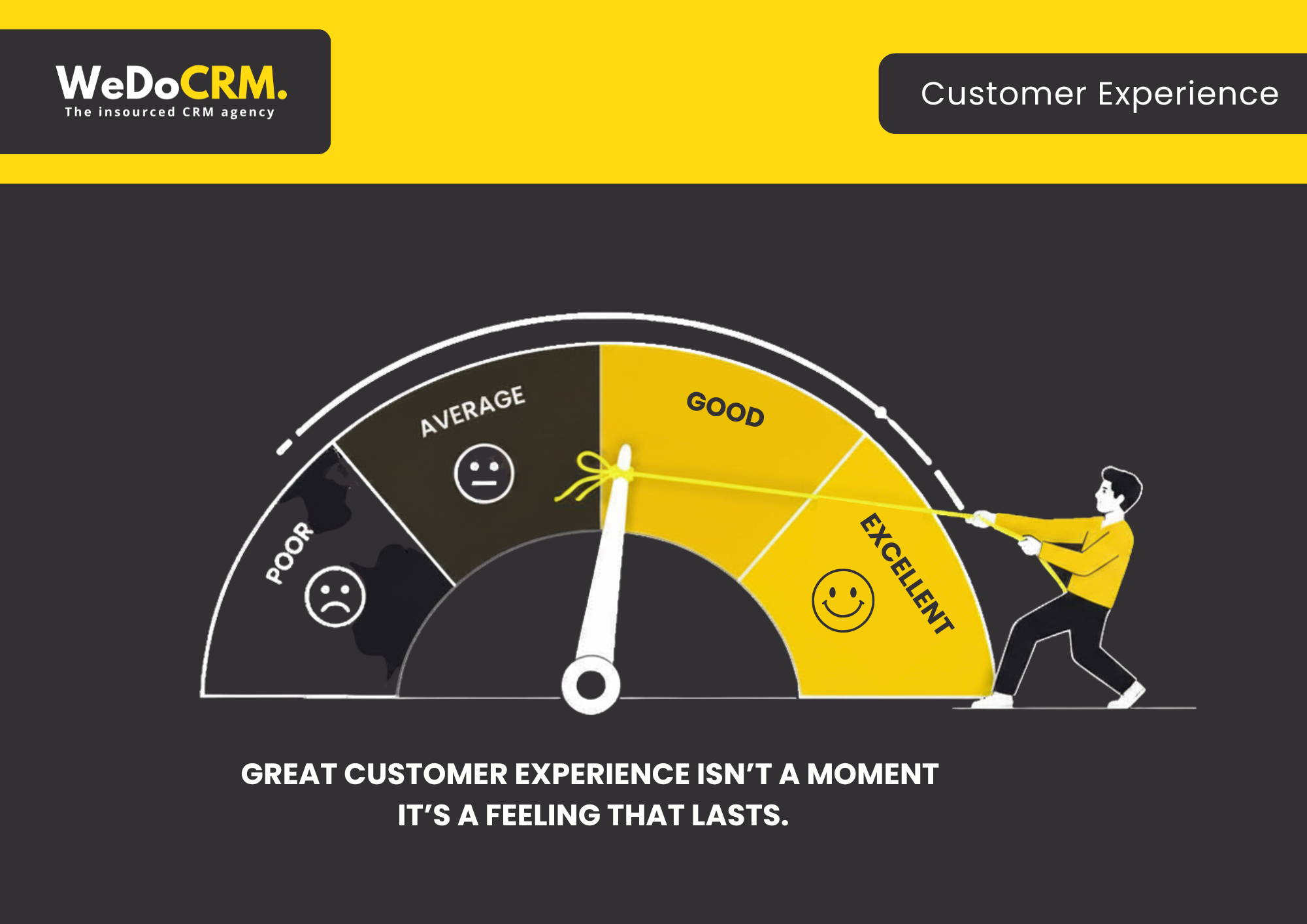
Sending too many irrelevant emails is one of the quickest ways to make customers tune out.
- Sending too many irrelevant messages leads to customer fatigue
- Customers quickly start ignoring your emails and campaigns
- Low relevance damages engagement over time
- Most disengaged customers won’t tell you why they stopped paying attention
- Unsubscribe rates only show part of the problem
- Silent disengagement is often the bigger risk
- Relevance matters more than volume
Most people won’t complain, they’ll just stop engaging.
By the time they unsubscribe, the damage has usually already been done.
How To Fix It – Step By Step
- Set clear send frequency limits for each customer segment
- Send messages based on customer behaviour, not fixed dates
- Prioritise actions and engagement over “just because it’s scheduled”
- Focus on sending fewer, more relevant messages
- Give personalised communication room to perform
A well-timed message will almost always beat another random Tuesday email!
Want to create more relevant customer experiences without overwhelming your audience? Read our blog on how AI and CRM work together to improve personalisation, customer journeys, and smarter communication at scale. 👇
→ AI and CRM: Enhancing Personalisation and Customer Experience
How WeDoCRM Can Help You
Most CRM platforms don’t become messy overnight. Instead, it tends to happen gradually and almost unnoticed – whether that’s a duplicate record here, a forgotten automation there, or, most famously, the “we’ll fix that later” workflow that somehow survives for three years.
Over time, as these small issues quietly accumulate, your CRM can slowly shift from being a helpful, structured system into something that actually creates more problems than it solves.
However, this situation doesn’t have to be permanent. In fact, with the right focus and approach, it can be turned around. Whether your data needs cleaning, your automations need untangling, your reporting needs rebuilding, or your customer journeys simply need more logic and care, we can help you get everything back under control.
Start small:
- Clean up your data
- Review your automations
- Fix your segmentation
- Align your teams
- Focus on customer experience over campaign volume
Or… skip straight to the easier option… Put the kettle on, grab a biscuit (a chocolate digestive please), and let us do the heavy lifting for you. WeDoCRM – it’s what we do!
You can also Book a free CRM audit with WeDoCRM, we’ll take an honest look at what you’ve got, tell you exactly what needs fixing, and show you what a clean, well-structured CRM could do for your revenue.
Get in touch, we are excited to hear from you!
Sales@wedocrm.co | Book a call with us
Frequently Asked Questions – Common CRM Problems
Here are the most common questions asked about CRM problems.
What are the most common CRM mistakes?
The most common CRM problems usually come down to a few key issues. Businesses collect dirty or unnecessary data, let automations become outdated, and rely on messy segmentation (the classic batch-and-blast approach, which doesn’t work). On top of that, many teams break their preference centres without realising it and one of the biggest but most overlooked problems is when sales and marketing operate in silos instead of working from the same system and data.
Why is my CRM platform not working?
In most cases, it’s not a platform problem, it’s a strategy and process problem. The CRM is doing exactly what it’s been configured to do. The issue is that the configuration was built quickly, hasn’t been reviewed, and was never tied to clear commercial outcomes.
How do I know if my CRM data is bad?
Signs include: high bounce rates on email campaigns, contacts with missing or inconsistent fields, duplicate records, segments that don’t behave as expected, and reports that feel inaccurate. A structured data audit will quantify the problem and tell you where to focus.
How often should CRM automations be reviewed?
At minimum, annually. In practice, any automation that’s customer-facing — welcome flows, win-back sequences, nurture journeys — should be reviewed every six months. If the copy goes stale, offers change, and customer behaviour shifts! An automation that performed well at launch may be actively damaging trust now.
Can I fix these CRM mistakes myself?
Yes, most of them. The data audit, governance documentation, and segmentation work are all things an internal team can lead. The challenge is objectivity: it’s hard to diagnose a system you’re too close to.
What does a CRM agency do that I can’t do in-house? A CRM agency brings an outside view, specialist expertise across platforms, and a structured methodology for diagnosing and fixing problems quickly. WeDoCRM deliberately works to build internal capability, we’re not interested in creating dependency. Our goal is to solve the problem once, properly.
Want more of our insights? Check out:
- Make Your CRM Budget Work Harder This Financial Year – Tips from our CEO
- Why Businesses Are Exploring Alternative CRM Platforms – What CRM Platform is best for you?
- Email Marketing Trends – Find out about the latest trends