
Turn Your CRM Into Revenue (With or Without an Agency)
Your CRM software is sitting there right now, costing you £X per month. Question: Is it making you more money than it costs? Or is it just… there?
When properly configured and actively managed, your CRM should be your most profitable marketing channel. Not your most expensive one.
The difference between businesses getting 10X ROI from their CRM and those getting nothing? It’s not the software. It’s how they use it.
Let’s break down exactly how to turn your CRM from a database into a money-making machine, and when it makes sense to bring in experts to do it for you.
1. Automate Your Sales Process
Every manual email, every one-off follow-up, every hand-typed message is a revenue bottleneck. If it takes your team 2 hours a day to send follow-ups, that’s 500+ hours a year not spent on doing other activities, such as closing deals.
What this looks like when it’s making money:
Use this as your guide:
- Welcome sequences that convert 15-25% of new subscribers into customers
- Abandoned cart automations recovering 10-15% of lost sales
- Post-purchase upsell sequences increase customer lifetime value by 30%+
- Re-engagement campaigns bring back dormant customers
- Lead nurture workflows that warm prospects until they’re ready to buy
Each of these runs in the background automatically, delivering the right message at the right time without any manual effort.
How to Do It Yourself
Good news! Most modern CRM/ESP platforms like HubSpot, Salesforce, and Customer.io come with built-in workflow builders, so you don’t need to start from scratch. To get automation working effectively, we recommend focusing on a few key elements:
- Clearly mapped customer journeys
- Trigger points for each automated sequence
- Quality copywriting for each touchpoint
- A/B testing framework to optimise over time
Please don’t think that sales automation replaces your team; it doesn’t, but it does make them more effective by letting them focus on what actually drives revenue, like the personal touch and closing those deals!
When to Call in a CRM Agency
Building one workflow takes 4-8 hours. Building a complete automated ecosystem? 40-100 hours, plus ongoing optimisation, testing, Innovation and Measurements too. .
Most businesses either:
- Build one or two workflows and stop (leaving money on the table)
- Build them poorly and get mediocre results
- Never start because it’s overwhelming
We can build your entire automation infrastructure in weeks, not months. We’ve done it dozens of times. We know what converts. We handle the technical setup, copywriting, and optimisation, so you get the revenue lift without the time sink!
Example workflow from Customer.io
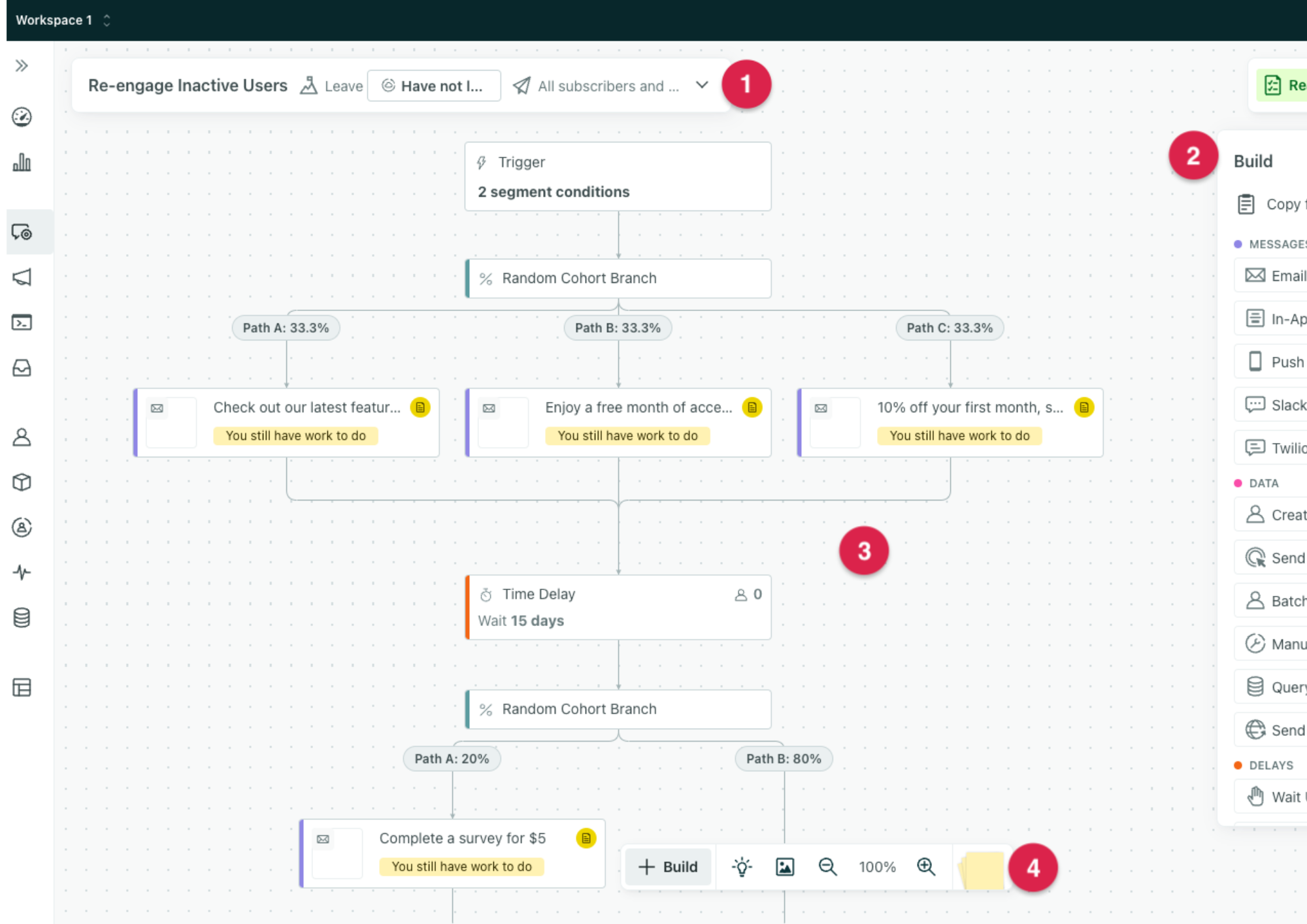
At our agency, we’ve developed automated systems that generate £ 50,000-£500,000+ in additional annual revenue for clients. The setup pays for itself in months.
See it in action! Explore our client case studies to discover how we help businesses automate and drive growth.
2. Segment Your Audience
Sending the same message to everyone is leaving so much revenue on the table. A retail customer and a B2B customer need different messages. A first-time buyer and a repeat customer need different offers. Generic or “spray and pray” emails will not convert. If you segment and personalise your campaigns, you will be more likely to get people responding, especially if it is tailored to their preferences.
Examples of different segmentation strategies:
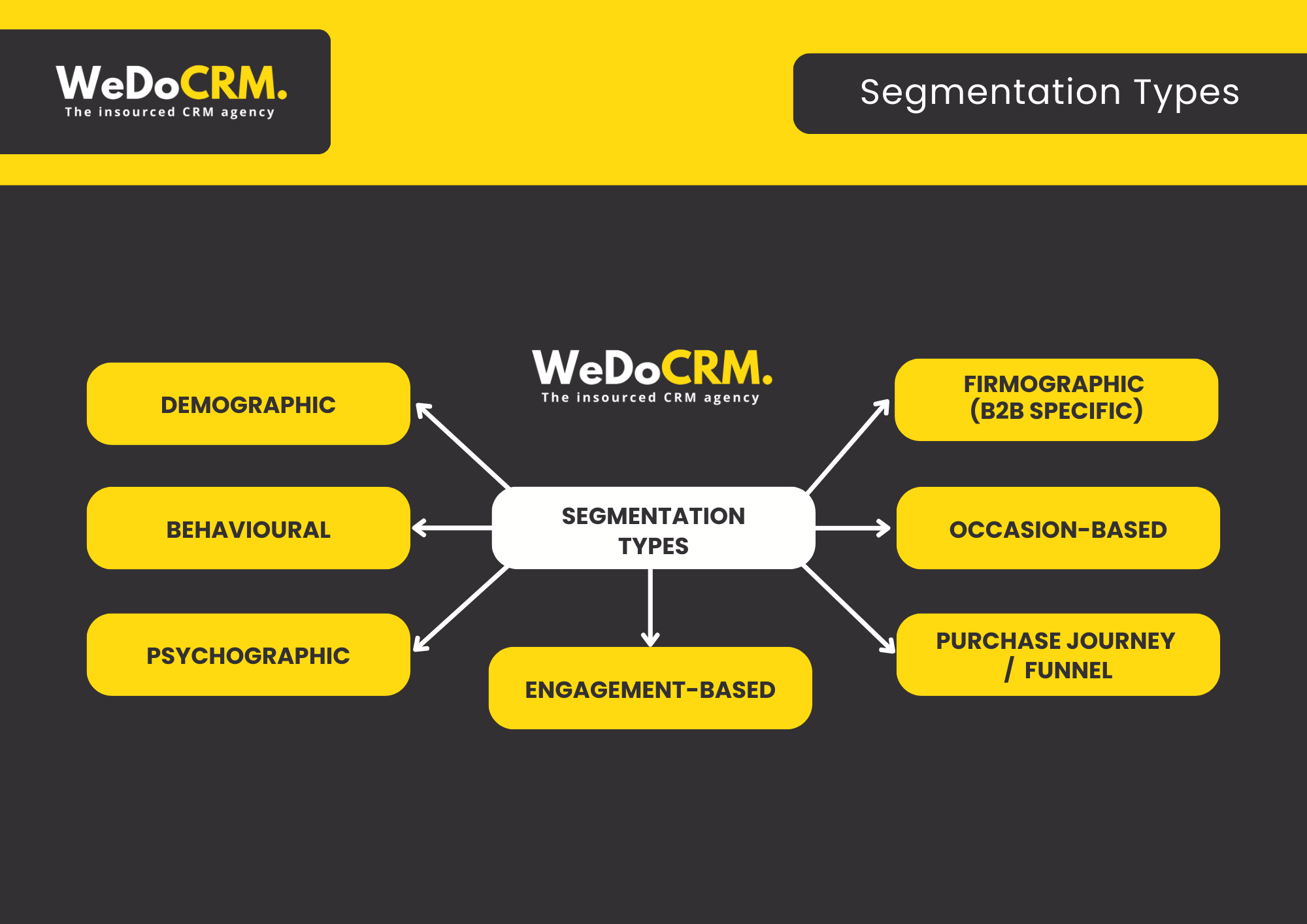
Use this as your guide:
- B2B vs B2C segments getting industry-specific messaging
- High-value vs low-value customers getting appropriate offers
- Geographic segments seeing location-relevant products
- Behaviour-based segments (engaged vs dormant, browsers vs buyers)
- Lifecycle stage segments (new subscriber vs loyal customer)
How to Do It Yourself
Start with basic segmentation:
- Analyse your customer data to find natural groupings
- Create segments in your CRM platform based on behaviour, demographics, and purchase history
- Map out what messages/offers each segment should receive
- Build targeted campaigns for each segment
- Track performance and refine
know your audience, speak their language, and let your CRM platform do the heavy lifting.
When to Call in a CRM Agency
Most businesses segment by industry or purchase history and stop there. Real segmentation means analysing your data for profitable patterns, configuring your CRM properly, and constantly updating as customers change. Most teams just don’t have the time.
We do the heavy lifting: analysing your customer data, identifying profitable segments you didn’t know existed, building the technical infrastructure, and creating campaigns that convert.
Learn about our segmentation strategy and what we do for our clients here: How to Segment and Target your Audience with CRM
3. Stop Letting Sales and Marketing Work Against Each Other
When sales and marketing aren’t aligned, things fall apart fast. You end up with leads marketing swears are “qualified”, and sales immediately label as “not important.” Prospects slip into black holes during handoffs, teams duplicate work, messages clash, and deals are lost simply because no one followed up at the right moment.
B2B Commercial Process – How it Should Work
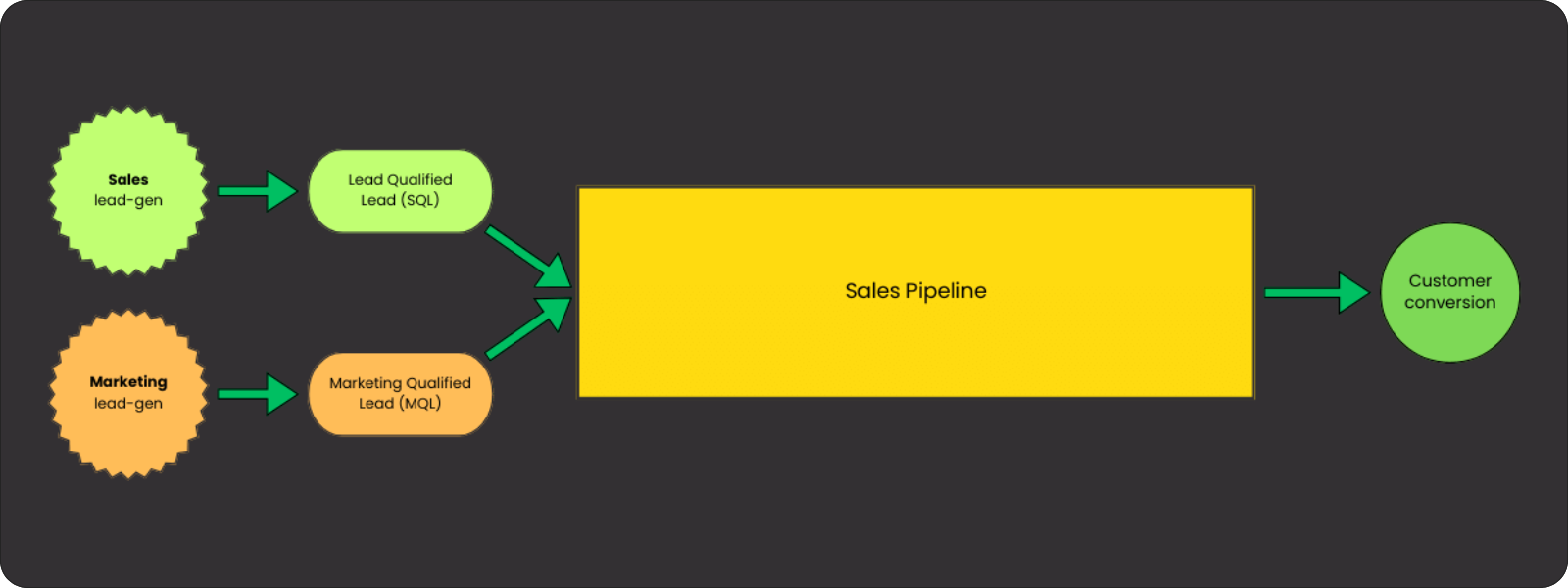
The above graphic shows how the process should work with the support and governance of CRM. Whilst much of the structure is the same, there are clear distinctions that show how Sales and Marketing work as a cohesive unit.
The cost? Sales and Marketing are not meant to be at war – far from it. They are both essential sides of the same Commercial coin with very specific roles to play that seamlessly complement one another. However, without CRM and the expertise it offers, it will be a challenge to implement and maintain the critical system infrastructure and processes that allow these two teams to work as one.
What This Looks Like When It’s Making Money:
- Marketing automatically nurtures leads until they’re sales-ready (with clear scoring)
- Sales has real-time visibility into every prospect interaction
- Lead recycling systems catch prospects who weren’t ready 3 months ago but are now
- Closed-loop reporting shows which marketing activities actually drive sales
- Both teams work from the same data, with the same definitions, toward the same goals
How to Do It Yourself
You need:
- Lead scoring model that both teams agree on
- Defined handoff process from marketing to sales
- Shared CRM dashboard that both teams actually use
- Regular alignment meetings to review the pipeline and optimise
When to Call in an Agency
Sales and marketing alignment is a political problem as much as a technical one. You need someone neutral who can:
- Get buy-in from both teams
- Build systems that both sides trust
- Configure CRM workflows that support both functions
- Mediate when definitions or processes are disputed
We’ve done this for dozens of B2B companies. We come in as the neutral third party, implement lead scoring and nurture automations that sales actually appreciates, and create dashboards that give everyone visibility.
See our B2B CRM approach here: B2B CRM: The Secret War between Sales and Marketing
4. How to Find Hidden Revenue in Your CRM Platform
There is so much data collected all year round from your CRM platform; there are opportunities sitting in front of you, you just need to find them. Most businesses go wrong here as they focus on new leads while ignoring the revenue sitting in their database.
When you start mining your existing CRM data, you’re not starting from scratch; you’re unlocking revenue that’s already within reach. Here’s how:
| CRM Data Opportunity | What It Means | Revenue Opportunity |
| One-time buyers | Customers who purchased once but never returned | Re-engagement campaigns and repeat purchase offers |
| High-value customers | Customers with high spend or strong engagement | Upsells, premium products, and exclusive offers |
| Churn signals | Behavioural patterns showing customers may leave | Proactive retention and save campaigns |
| Dormant leads (6–12 months) | Leads that went quiet but never said “no” | Timely follow-ups when they’re ready to buy |
How to Do It Yourself
Start simple:
- Pull reports on customer purchase patterns
- Identify customers who bought once 6+ months ago (email them)
- Find your top 20% of customers (create a special offer)
- Review leads from 3-6 months ago (re-engage them)
When to Call in an Agency
Basic analysis is doable. But sophisticated data mining requires:
- Statistical analysis skills most marketers don’t have
- Technical ability to build predictive models
- Strategic thinking about which segments to prioritise
- Time to actually execute on what you find
We do advanced customer analytics: cohort analysis, churn prediction, lifetime value modelling, and propensity scoring. Then we build automated campaigns to capitalise on those insights.
Client Example: Using real-time CRM analytics and A/B testing, we created emails that converted 188% better. We rolled this insight into automated campaigns, boosting engagement and results.
You can read this case study here: Achieving Record-Breaking Revenue for a Healthcare AI Company
5. Track What Actually Makes You Money (Not Vanity Metrics)
Most businesses track the wrong things:
- Email open rates (nice, but don’t pay bills)
- Number of leads (meaningless if they don’t convert)
- Social media engagement (feels good, but where’s the revenue?)
What This Looks Like When It’s Making Money:
- Clear dashboards showing revenue by source, campaign, and segment
- Attribution modelling that shows the full customer journey
- ROI tracking for every marketing activity
- Automated reporting that flags what’s working and what’s not
- Forecasting based on pipeline data
How to Do It Yourself
Set up:
- Revenue attribution in your CRM
- Custom dashboards focused on money metrics
- Monthly review process to analyse what’s working
- Testing framework to optimise based on data
When to Call in an Agency
This is where a lot of teams get stuck, and that’s totally normal. Connecting your CRM with analytics and ad platforms can get technically tricky, and it needs ongoing attention to make sense of the data. On top of that, knowing which numbers actually matter for your business takes experience. This is often when it helps to bring in a CRM agency: when the tools are in place, but turning all that data into clear, revenue-driving action starts to feel overwhelming. We would love to help you!
What Now?
The ball’s in your court. You can implement these strategies yourself, or you can bring in people who’ve done it dozens of times before (and we can do it FAST!).
If you go with an agency, you’re essentially buying back your time. They handle data maintenance, compliance, troubleshooting, optimisation, all the stuff that needs doing but isn’t the best use of your day. You get the revenue lift without the headache.
How WeDoCRM Can Help You
At WeDoCRM, this is what we do. All day. Every day.
Get in touch with WeDoCRM today
You’ve got better things to do than wrestle with technology that should be making your life easier, not harder. We can’t wait to speak to you!
Want more insights? Check out:
- 2025 CRM Trends – Where we predicted all this
- AI and CRM: Enhancing Personalisation – Deep dive into AI magic
- CRM Audit Services – Find out if you’re ready
- Reimagining Retail CRM Whitepaper – Industry-specific insights