
HubSpot has been making some serious moves lately, and if you’re a HubSpot user, it’s worth paying attention. It’s going ALL in with AI.
Back in June last year, we wrote about HubSpot becoming the first CRM platform to deeply integrate with ChatGPT, and we said at the time that it was the first move in what was about to become a very competitive race. And yep, we were right. What started as a connector that let HubSpot users ask ChatGPT sophisticated questions about their customer data has evolved into something much bigger.
If you haven’t read that piece, it’s worth a look, because the principles we laid out then are even more relevant now.
The new AI-Driven search engines trend
One of the major predictions of 2026 is that traditional SEO will be replaced by Search Everywhere Optimisation (SEvO). This means Google is no longer the OG for searches and instead people are searching for their answers on AI such as Claude, Gemini or ChatGPT.
So it’s no surprise that HubSpot is moving quickly in this direction. The platform has been steadily expanding its AI tools under a suite called Breeze. These AI agents can help with things like handling support tickets, qualifying leads, enriching CRM data, and triggering automated workflows, often without needing a human to step in.
You can see how it works here.
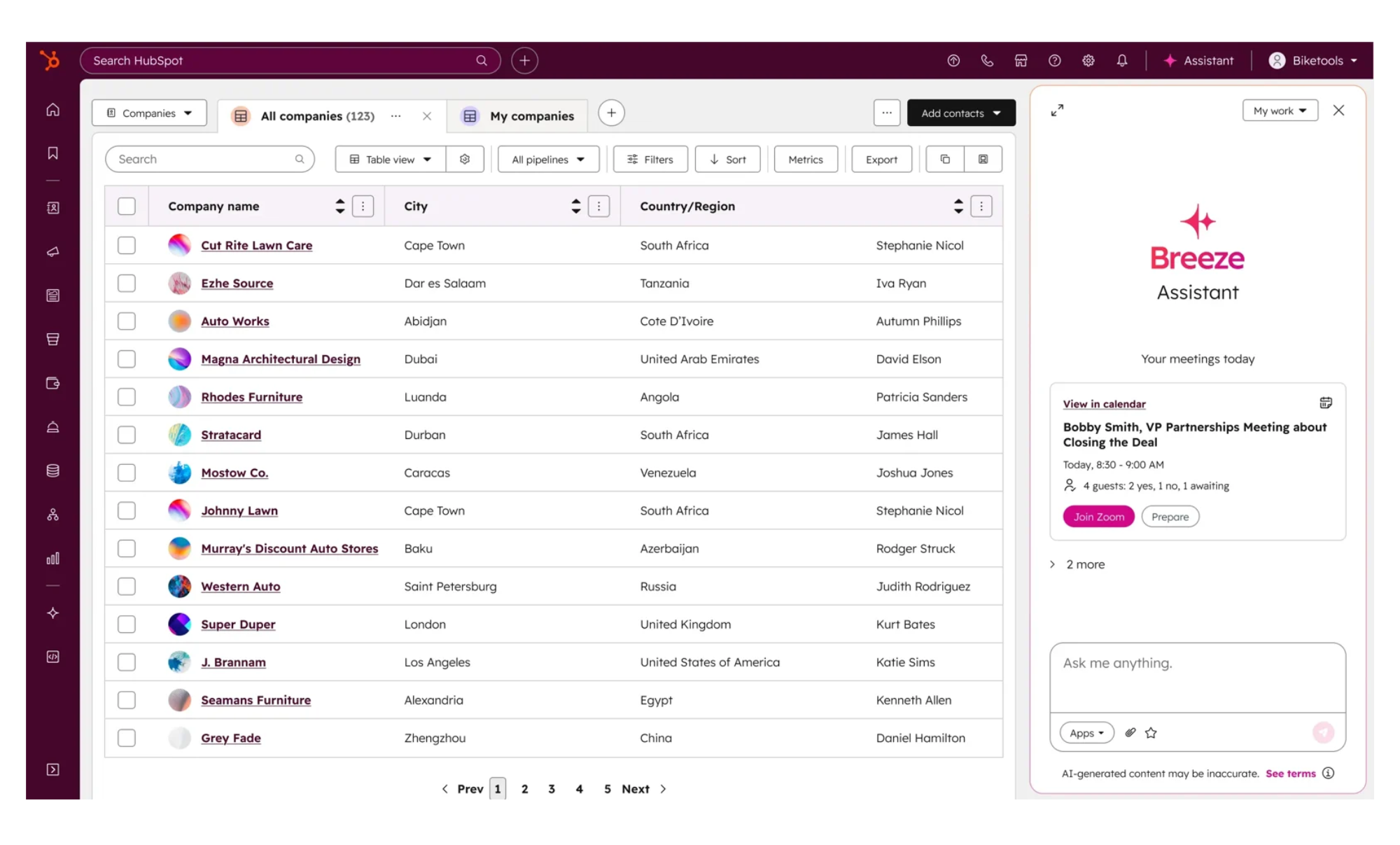
On paper, this all sounds great, but from a CRM perspective, CRM platforms with AI are only as good as the data.
AI is only as good as the data underneath it
If your data is a mess, even your smartest r system won’t deliver results.
This is the conversation we have with clients constantly. The excitement around AI features is real and justified, but too many teams are reaching for the shiny new tools before they’ve sorted the foundations.
Duplicate contacts? Inconsistent lifecycle stages? Lead sources that haven’t been mapped properly? Forms that aren’t connected to the right pipelines? These aren’t small issues when AI is making decisions based on them.
Before you activate Breeze agents or any AI at all on your CRM platform, ask yourself the same questions we’d ask during a CRM audit:
- Is your contact data clean and deduplicated?
- Are your lifecycle stages consistent and being used correctly?
- Do you have lead source tracking in place across every entry point?
- Are your key pages tagged properly so buyer intent signals are accurate?
The question isn’t whether to embrace it. It’s whether your setup is ready to make the most of it.
If you’re not sure, that’s worth finding out. A CRM audit is often the fastest way to understand what’s holding your platform back and what it could look like with the right foundations in place.
You can look at how to do your very own CRM audit with tips here: WeDoCRM CRM Audit Services
Get in touch with us to find out more. We would love to hear from you!