
Why Buying CRM Technology Feels Like a Trap (And How a CRM Consultancy Can Help)
A CRM consultancy helps you pick, set up, and actually fall in love with your CRM software – starting with what your business needs, not what some vendor’s slide deck says you need (even though they might be very, very pretty!). Because we’re not selling any particular platform, our advice is shaped around you, not a sales quota.
At WeDoCRM, we see the same story play out again and again: a business buys a CRM full of promise, and six months later, half the team isn’t using it. This usually isn’t because anyone made a bad decision, it’s because the process of buying CRM technology is genuinely confusing, and most people tackle it without anyone in their corner.
So let’s talk about why that happens, and what a CRM consultancy (hello, it’s us!) actually does differently.
Why is CRM Technology Confusing?
People in this industry won’t say it out loud, but CRM technology is genuinely overwhelming. There are hundreds of platforms, thousands of features, and about a dozen ways to configure each one. Even experienced business leaders, CMO’s, CTO’s can sit through a software demo and walk away more confused than when they started.
The sales demo with the flashy slides, the impressive numbers and a platform that looks like it can solve all your problems.
There’s lots of new terminology, loads of features, and everything sounds impressive. The person showing you the system is helpful and enthusiastic, but naturally, they’re focused on showing you EVERYTHING the platform can do.
And that’s where things can go a bit off track.
The demo is designed to show what’s possible. You see the best version of the system, hear about exciting features, and it’s easy to get caught up in it all.
But the really important conversation about your business, your team, and how you actually work day-to-day often gets missed. That’s how businesses end up with systems that are too big, too complex, and full of things they don’t really need.
Think of us as your independent advisors for choosing and setting up CRM or tech built around your needs, not a vendor’s sales targets. No platform bias, no commission strings: just advice that’s actually about you.
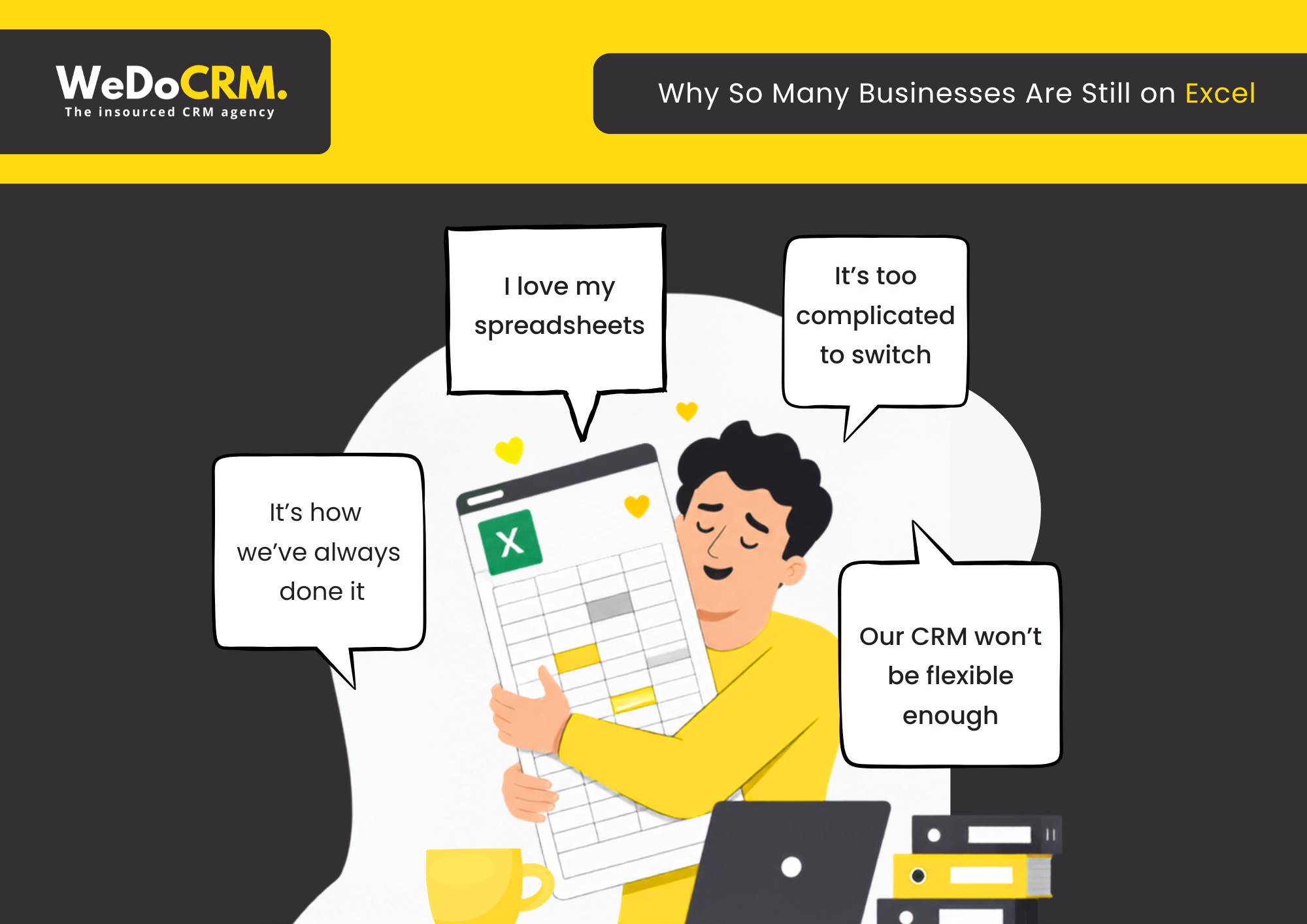
Why Are So Many Businesses Are Still on Excel Spreadsheets?
If you’re still running your customer data through spreadsheets, you’re in very good company.
Moving to a CRM platform or getting new technology feels like a big leap, financially, operationally, and emotionally. What if the new system is just as confusing as the last one? Or the team resists it? And you spend months implementing something that doesn’t actually solve the problem?
Those aren’t irrational fears. They’re the lived experience of a lot of businesses who’ve been there!
Excel, for all its limitations, is familiar. It does what you expect. Nobody needs training on it. So when the alternative feels risky and complicated, staying put feels like the sensible choice.
Spreadsheets can’t tell you which leads are going cold, which customers are drifting, or which parts of your sales process are leaking.
When you’re ready to make the move, the key is doing it with the right support so it doesn’t feel like a leap in the dark.
Your CRM Game Plan: The Steps That Matter
We recommend getting these fundamentals right, and CRM implementation shifts from reactive firefighting to a process you can actually plan, predict, and control.
| Tip | What to Do |
| Start with goals, not features | Focus on what you want the technology to help you achieve, then ask providers to show how it supports your real processes. |
| Clean your data first | Remove duplicates, fill in gaps, and organise contacts before migrating anything. |
| Choose the right fit | Pick a CRM or piece of tech that suits your business today rather than paying for features you won’t use. |
| Ask questions | If you aren’t clear, ask. A good partner will explain things to you as much or as little as you need. |
| Automate real problems | Use automation for tasks that are often missed, like follow-ups and reminders. |
| Plan for adoption | Ongoing training helps your team understand the value and use the system properly. |
| Keep improving | Review performance regularly and refine your CRM and tech as your business grows. |
What It Looks Like When It’s Working
When CRM is set up thoughtfully and used consistently, the change is noticeable pretty quickly and the numbers back this up.
Sales managers stop chasing updates, they can just check. Follow-ups happen without being remembered. Marketing, sales, and service all see the same picture. And decisions are made on real data, not guesswork.
Results we typically see with clients: a 30–40% improvement in lead follow-up rates within the first 90 days. Pipeline visibility that genuinely didn’t exist before. Sales cycles are shortened simply by removing manual admin, and perhaps most importantly… a team that actually wants to use their CRM. Smiley faces all round!
That’s what’s possible when the setup matches the business.
Where We Come In – Hello, We are WeDoCRM!
At WeDoCRM, we think the best CRM projects start long before anyone opens a pricing page.
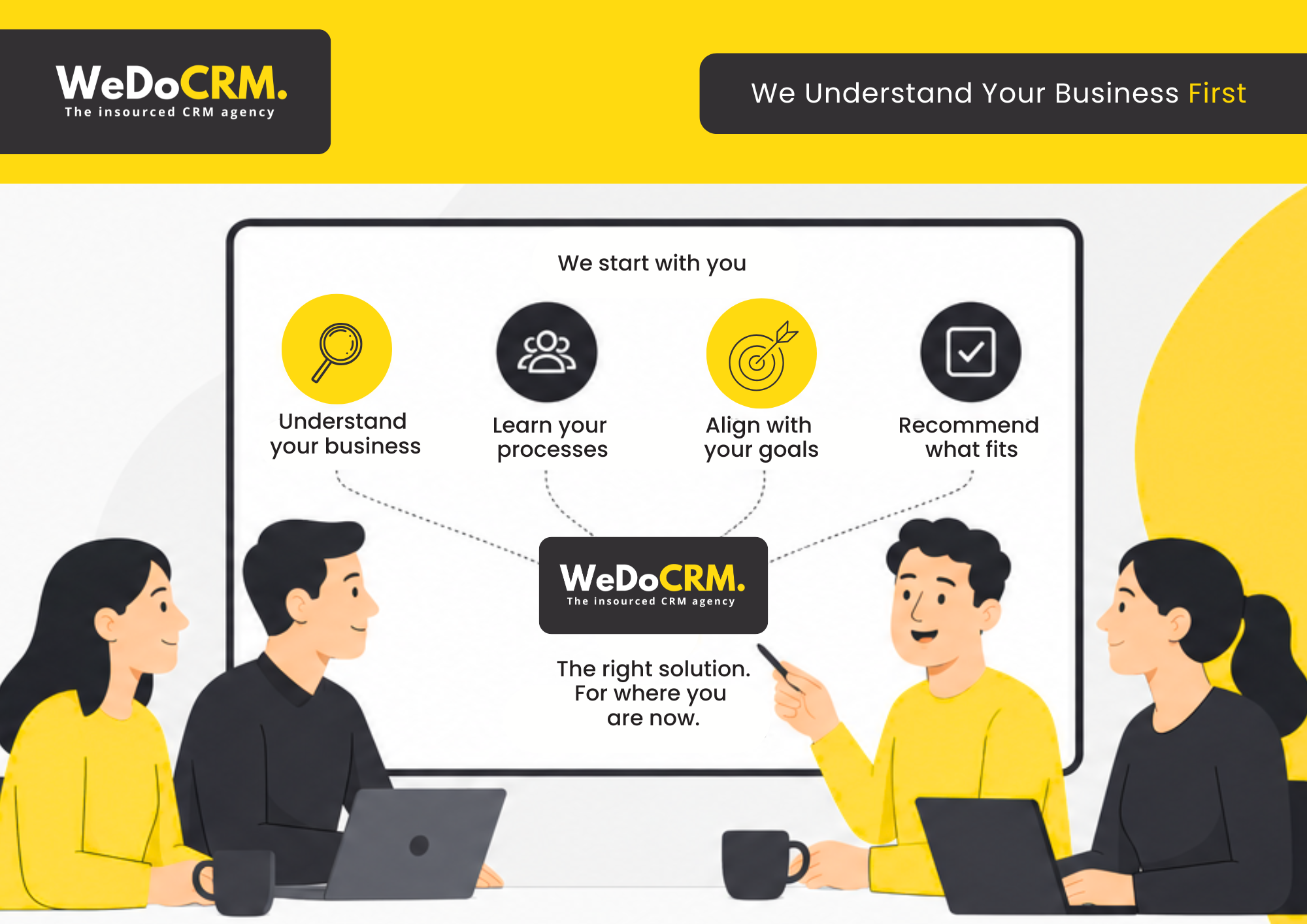
We work with you to understand your business first (your processes, your team, your goals!) and then figure out what technology actually fits. We’re not here to push the biggest package or the most impressive feature set.
We’re here to help you find the right solution for where you are right now, and to make sure it’s set up in a way your team can actually get behind.
We work with MDs, CEOs, Heads of IT, Customer Experience leads, and Finance Directors across all sectors, including construction, professional services, and more. Whether you need a simple, clean CRM setup, help moving off spreadsheets, or guidance through a more complex implementation on HubSpot or Salesforce — we build a plan around you.
No unnecessary upgrades or overwhelming systems. Also definitely NOT being left to figure it out once the contract’s signed!
👉 Not sure what CRM you actually need? Start here.
CRM vs ESP – Which One is Right for Me?
FAQ – CRM Technology
What does a CRM consultancy actually do?
A CRM consultancy helps you choose, implement, and get real results from your CRM. The focus is on your business needs first, understanding your processes, recommending the right platform and tier, managing the build, and supporting your team through adoption. (We can’t wait to meet you, give us a call!)
How do I know if I need a CRM consultant?
If your current CRM platform isn’t being used, if you’re still relying on spreadsheets, if your sales and marketing teams aren’t working from the same data, or if you have limited visibility on your pipeline, it’s worth having a conversation.
Which CRM / ESP is best for UK businesses?
It genuinely depends on your size, sector, and goals. HubSpot works brilliantly for growing SMEs. Salesforce suits more complex, enterprise-level needs. The right answer starts with understanding your business, not the platform.
How long does a CRM implementation take?
A focused, straightforward implementation usually takes 4–8 weeks. More complex builds with integrations and data migration can take 3–6 months. Getting the foundations right is worth the time.
Why do so many CRM projects struggle?
Usually a combination of things: no clear implementation plan, data that needs more work than expected, low team adoption, and taking on more platforms than the business actually needs. All of these are manageable with the right support.
Can you help us move off Excel onto a CRM or other technology? Absolutely! It’s one of the most common things we help with. We guide businesses through cleaning and migrating their data, designing a CRM or tech stack that reflects how they work, and supporting the team through the change.
Do you work with HubSpot and Salesforce? Yes, across both platforms and others. Our starting point is always what’s right for your business, then we make sure it’s configured and adopted properly.
Want to know more? Read more of our insights:
- SME CRM Solutions – Find out the best solutions for you
- How SMEs Can Compete with Bigger Brands – The best tips to compete with bigger brands
- Create a CRM Strategy – Find out how to create a CRM strategy for your small business