
What Visual Search Means for Your CRM Strategy
Your customers are changing how they look for things. More and more of them aren’t typing a description into a search box. They’re pointing their phone at something and letting AI work out what it is. For marketing teams, that’s a search story.
For anyone who looks after customer data, it’s a CRM story too, and a lot of businesses are missing that part.
This shift is already playing out across ecommerce more broadly, not just in isolated visual search features. As we explored in How AI Is Redefining How Customers Shop Online, visual search is one of several ways AI is changing how customers discover and buy, sitting alongside agentic commerce, smarter recommendations, and AI-powered customer service as part of a much bigger shift in online shopping behaviour.
The common thread across all of them is the same one at the heart of this article: none of it delivers real value without the data and CRM foundation to support it.
What is visual search?
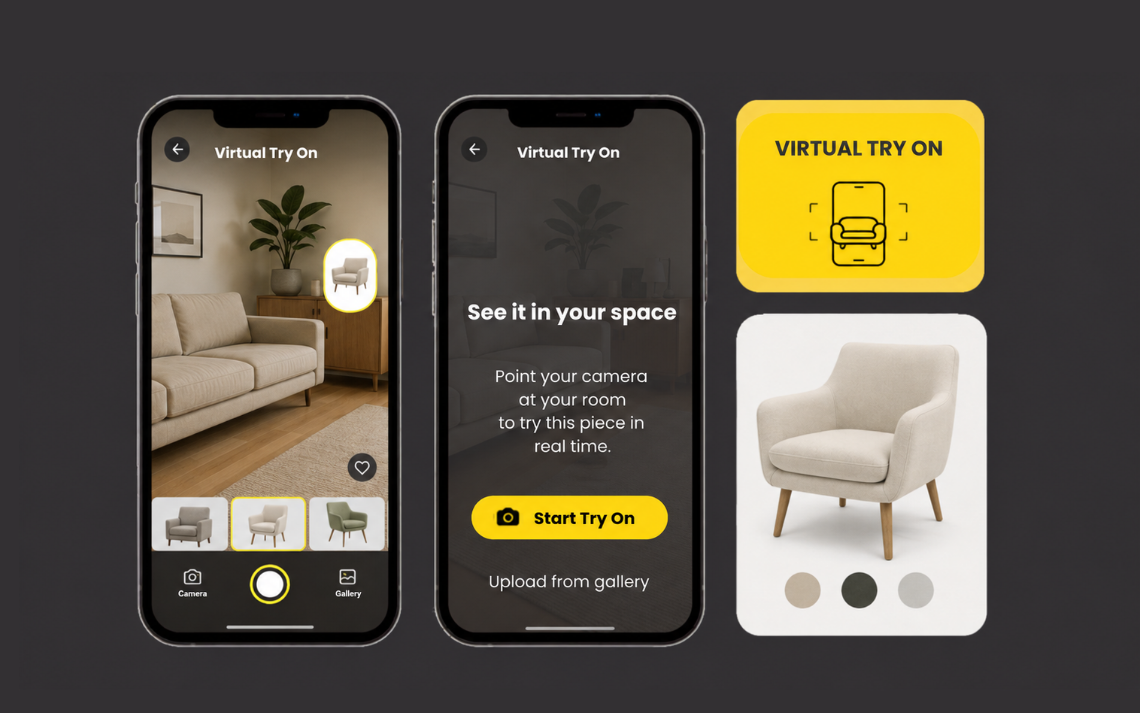
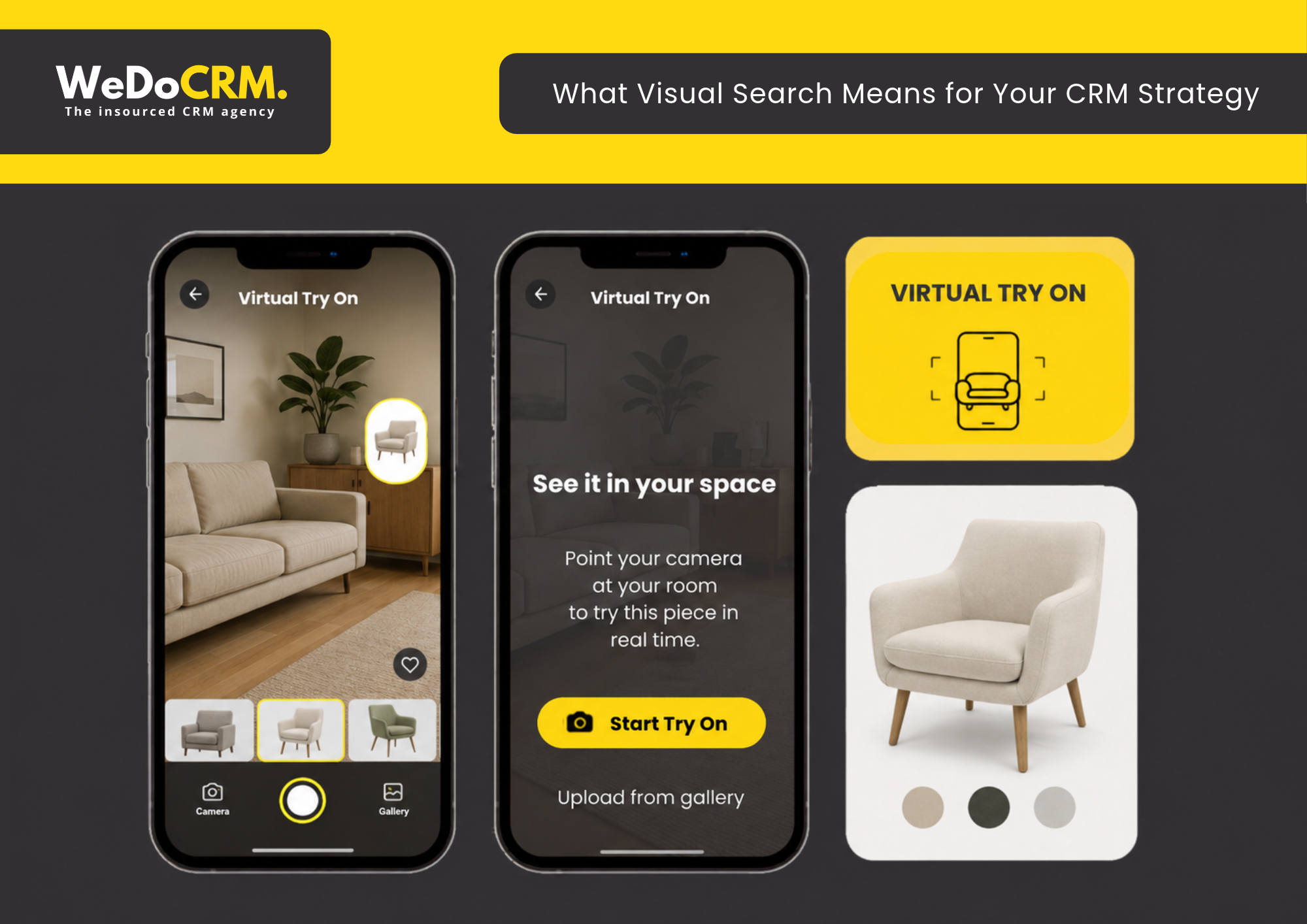
Visual search lets someone use a photo as their query. They snap a picture of a sofa in a hotel or screenshot a jacket on Instagram, and tools like Google Lens, Pinterest Lens or Amazon’s StyleSnap return matching or similar products. There are no keywords to guess and no need to know a brand name.
The adoption of visual search is growing, particularly among younger consumers.
Google says Lens now handles more than 20 billion visual searches every month, with around 4 billion of those searches having shopping intent.
Pinterest has also highlighted the growing role of visual discovery in shopping, as consumers increasingly use images to find and explore products.
If your business still treats search as a purely text-based channel, you’re likely missing a growing chunk of how your customers actually want to shop. This matters just as much for your visual search marketing strategy as it does for the CRM data sitting behind the scenes, quietly deciding whether that visual search experience feels personal or generic. For millennials who grew up with a camera in their pocket, this feels natural. For brands, it’s a signal that the rules of discovery are changing.
Why visual search?
because sometimes a screenshot says more than a search bar ever could. 📸 Instead of typing what they want, customers can simply snap a photo and search for it.
For CRM, that’s a new source of customer intent. But if that interaction isn’t tracked and connected to the customer journey, you could be leaving some seriously useful data on the table.
What does this mean for marketing and CRM?
Visual search creates another opportunity to bring people into the customer journey and who doesn’t want that!? Someone might discover a product through Google Lens or Pinterest, visit your website, browse a product and eventually become a customer. The world is not only digital, its visual.
That journey creates valuable first-party data – CRM teams can then use those interactions to understand customer interests, personalise follow-up communications, build relevant segments and create more targeted journeys.
But only if that data actually makes it into the CRM in a usable form. Here’s where it tends to break down:
How to use visual search within your CRM platform
Most major CRM and marketing platforms already have the building blocks to support this – the key is connecting them deliberately, rather than treating visual search as a website feature that sits outside the CRM entirely.
1. Create a dedicated source/channel value for visual search traffic
In platforms like HubSpot, Salesforce, or Braze, set up UTM parameters or a custom source property specifically for visual search referrals (e.g. “Google Lens,” “Pinterest Lens”). This means it shows up in attribution reporting as its own channel, not lumped into “organic” or “direct.”
2. Use custom properties or events to log visual search interactions
Most CRMs allow custom event tracking. Create an event type such as “Visual Search Discovery” or a custom contact property that fires when a visual-search-tagged session lands on the site. This turns an anonymous visit into a data point tied to that contact’s record once they’re identified.
3. Feed visual search data into your existing segmentation
Once you’ve tagged visual search activity, use it like any other customer behaviour. For example, if someone finds your site through a visual search for “leather sofas”, add them to your home or furniture segment, just as you would if they clicked a related email or searched for the same product on your website.
4. Trigger relevant automated journeys
Use your CRM’s workflow or journey builder to create a specific follow-up sequence for visual-search-originated leads, for example, a welcome flow that reinforces the specific product category they discovered you through, rather than a generic new-visitor sequence.
5. Sync product catalogue data between your CMS/PIM and CRM
If your product data lives in a separate system (Shopify, a PIM, a custom catalogue), make sure it syncs cleanly into your CRM or marketing platform. Inconsistent naming or missing attributes here will limit both visual search matching accuracy and your CRM’s ability to segment based on it.
6. Connect the data beyond the website
Retail CRM platforms can now bring visual search data into stores and sales conversations. This lets teams see what customers have been browsing and use that insight to make recommendations that feel genuinely personal.
7. Review attribution reporting regularly
Build a simple report or dashboard that isolates visual-search-tagged contacts, so you can see whether this channel is actually contributing to pipeline or purchases over time, rather than assuming it’s working (or not) without evidence.
How a CRM Agency can help your business get visual search right
A CRM agency can help turn visual search from a new trend into a real revenue opportunity, connecting technology, data and customer experience without adding more pressure to your internal team.
We built WeDoCRM around solving precisely this kind of problem. Because we work across Salesforce, HubSpot, Dotdigital, Customer.io, Iterable and other platforms, our advice about visual search CRM data integration isn’t shaped by which platform we happen to sell. It’s shaped by what genuinely fits your business, your existing tech stack, and your growth plans.
Whether you’re auditing your current data quality, planning a migration, or trying to figure out why your CRM isn’t delivering the ROI leadership expects, we bring senior-level expertise without the cost or delay of a full-time hire.
If you’re rethinking your CRM platform strategy as part of a wider digital transformation, or you simply need pre-vetted consultants who can step in through the CRM Network with a service guarantee, we’d be glad to talk.
Talk to us today – we look forward to hearing from you!
Frequently Asked Questions
What is visual search, and why does it matter for CRM teams?
Visual search lets people search using a photo instead of text. It matters for CRM because it creates a new discovery channel that needs to be tracked and connected to a customer’s profile, otherwise valuable intent data is lost.
How does visual search traffic show up in CRM data if it isn’t tagged properly?
It typically shows up as “direct” or “unknown” traffic, with no visible source or intent signal, making it much harder to personalise follow-up communications or build accurate segments.
Does visual search only matter for e-commerce businesses?
No. Retail and fashion may see the most adoption, but visual search is expanding into other areas too. If your business has visual products or content, you can use visual search to attract and understand customers.
Can a CRM agency help connect visual search data to our CRM?
Yes. A CRM agency can help you track visual search activity, attribute it to the right channels and use it for segmentation and customer journeys — instead of letting that valuable data disappear into “unknown” traffic.