
How AI Is Redefining How Customers Shop Online
Who doesn’t love online shopping? Half of us here at WeDoCRM are one “add to basket” away from needing an intervention!
We’re in good company too. Over 2.7 billion people shop online in 2026, a third of the planet, all simultaneously adding things to a cart at 11pm, and the way they’re doing it keeps shifting under our feet. There are now roughly 28 million ecommerce sites worldwide, with new ones launching every day.
The AI Shift in Ecommerce
Ecommerce isn’t dabbling in AI. It’s one of the most enthusiastic adopters going, throwing it at everything from product recommendations and customer service to logistics and demand forecasting! Customers now expect a site to know roughly what they want before they’ve finished typing it. Businesses that build a proper AI strategy can increase revenue by up to 10–15% in some cases that’s next year’s marketing budget money sorted.
Here’s the bit that gets missed though… AI itself isn’t the differentiator anymore. Every platform has some flavour of AI bolted on. What separates the brands actually growing from the ones treading water is whether there’s a real strategy behind the data. Tech is the engine and strategy is the steering wheel.
In this piece, we’re going to walk through five specific ways AI is reshaping how people shop. We’ll show what genuinely drives ROI, where most implementations quietly fall apart, and what “good” looks like when a brand gets the strategy right instead of just buying the tech and hoping.
How AI Is Changing the Way Customers Discover, Shop and Buy
Personalisation has transformed online shopping, but AI is now taking things a step further by making customer journeys more proactive and intuitive.

Comments by: John McBriarty, Strategic Partnerships UKI Manager – Bloomreach
“The single biggest shift we’ve seen in the last 12 months is brands moving from bolting AI onto individual touchpoints to deploying it as a unified intelligence layer across the entire customer journey – from the first search query to the post-purchase follow-up. At Bloomreach, our platform Loomi processes over 250 million search queries a day and powers more than 100,000 email campaigns daily, serving roughly a quarter of US and UK ecommerce. What’s changed isn’t the technology itself – it’s that leading brands now expect AI to connect search, recommendations, messaging, and on-site personalisation into one coherent experience rather than treating each as a separate project.”
1) From Personalisation to Participation – in Comes Agentic Commerce
For a long time, personalisation has been fairly simple: “You bought this, so you might like that.”
Agentic commerce flips it. Instead of simply reacting, it’s starting to predict what customers might need next. That could mean recommending the right product at the right time, creating personalised bundles, or even tailoring the checkout experience based on a customer’s behaviour.
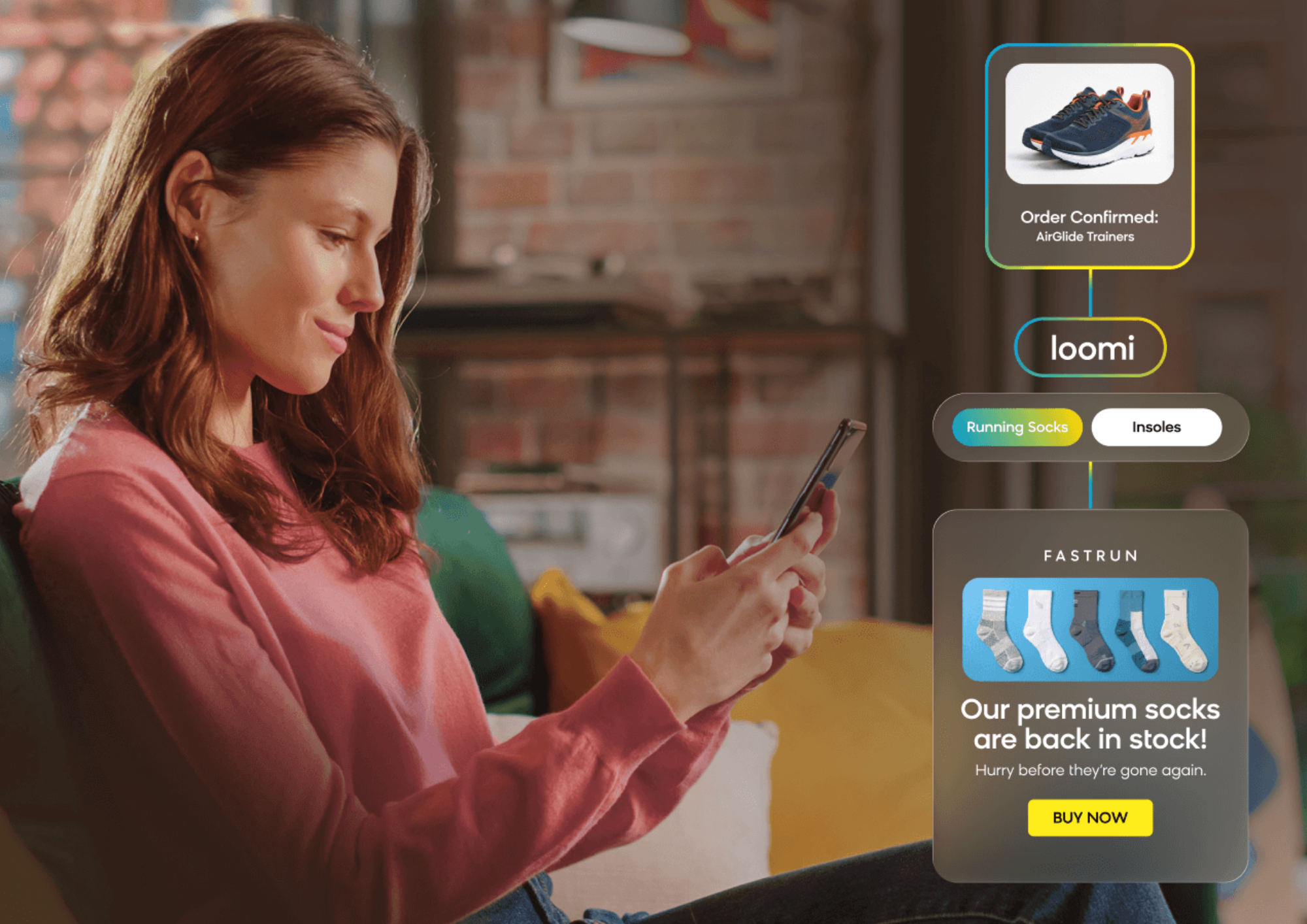
We’re not at the “AI checks out for you” stage yet (Emphasis on YET here, more on that below) for most brands. But the smart ones are quietly building toward it, and the groundwork is exactly what we covered above: clean data, real segmentation, predictive analytics that act before the moment’s lost.
Think about when you shop online… 71% of consumers expect personalisation as standard, and 76% get frustrated when it’s missing. Decent personalisation used to be a differentiator, it’s now the baseline.
 Bloomreach’s take:
“Bloomreach’s platform, Loomi, is built on three types of AI working together – rules-based AI for control and compliance, machine learning for precision (like churn prediction and optimal send time), and generative AI for creativity and campaign building. This means personalisation isn’t just reactive pattern-matching anymore. The marketer sets the strategy; Loomi handles the execution.”
2) Recommendations – The Path to Purchase Faster
Old-school “customers also bought” widgets were crude pattern-matching at best. Modern AI reads intent across the whole journey- what someone browsed, what they ignored, what they came back to- and adjusts in real time.
Done well, this isn’t just a sales tactic. It shortens the path to purchase, because the shopper finds the right thing faster instead of scrolling through forty irrelevant options trying to find the one they actually wanted.
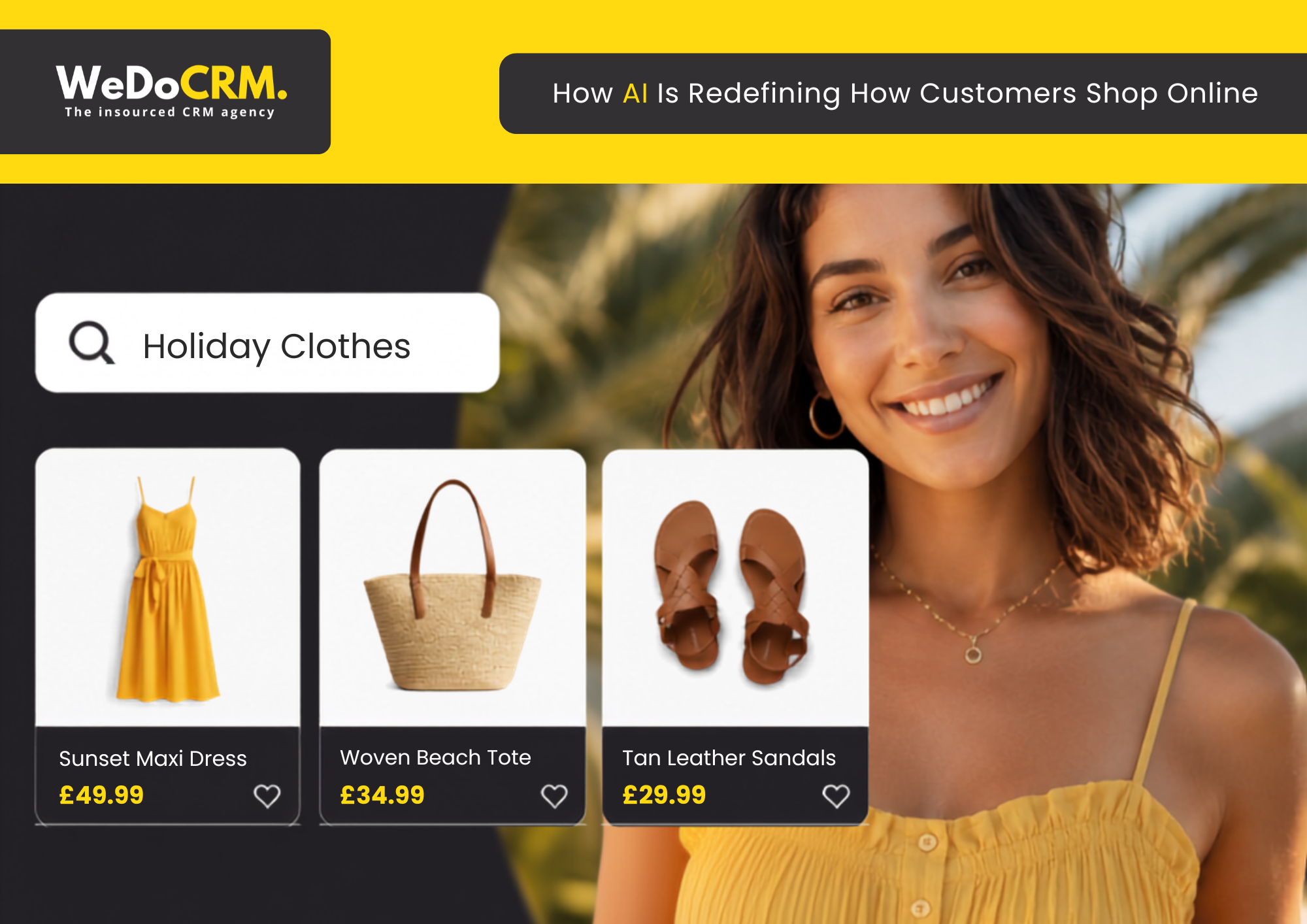
It goes further than that too. Because AI is constantly learning from individual behaviour, it gets sharper over time. Search for “holiday clothes” and a well-built system won’t just return sundresses, it’ll return sundresses in your favourite brand, in the size you usually buy, appropriate for the city break you’ve just booked based on your browsing history. AI magic!
3) Visual Search: Instead of Typing, You Show.
You know that feeling when you spot something- a lamp, a jacket, a pair of trainers… and you have absolutely no idea how to describe it in a search bar? “Beige… sort of curved… vibes of the 1970s” isn’t going to get you very far on Google.
That’s the problem AI visual search solves. Snap a photo, upload a screenshot, or point your camera at something, and the AI figures out colours, textures, shapes and style, then finds you something buyable in seconds. No keywords required, it’s the new way of searching.
Google Lens now processes more than 20 billion visual searches a month, and 62% of Gen Z and Millennial shoppers actively expect visual search to be available on ecommerce sites. It’s even mainstream enough that Google’s latest Shopping campaign features Stanley Tucci and Simone Ashley – yes, the Devil Wears Prada one – putting A-listers in front of a search format that barely existed a few years ago.
This is expanding into AR try-ons – pointing your phone at your face to try glasses or lipstick, or dropping a sofa into your living room before buying it – and voice search, now accounting for 20% of mobile queries.

Comments by: Anirban Bardalaye, Chief Product Officer, Bloomreach
“Search isn’t just a feature – it’s the foundation of every digital experience.
When you get search right, you can understand what your customer wants before they’ve finished typing. That’s why Loomi recognizes search intent, not just keywords – because the next evolution of search isn’t about matching terms, it’s about understanding people.”
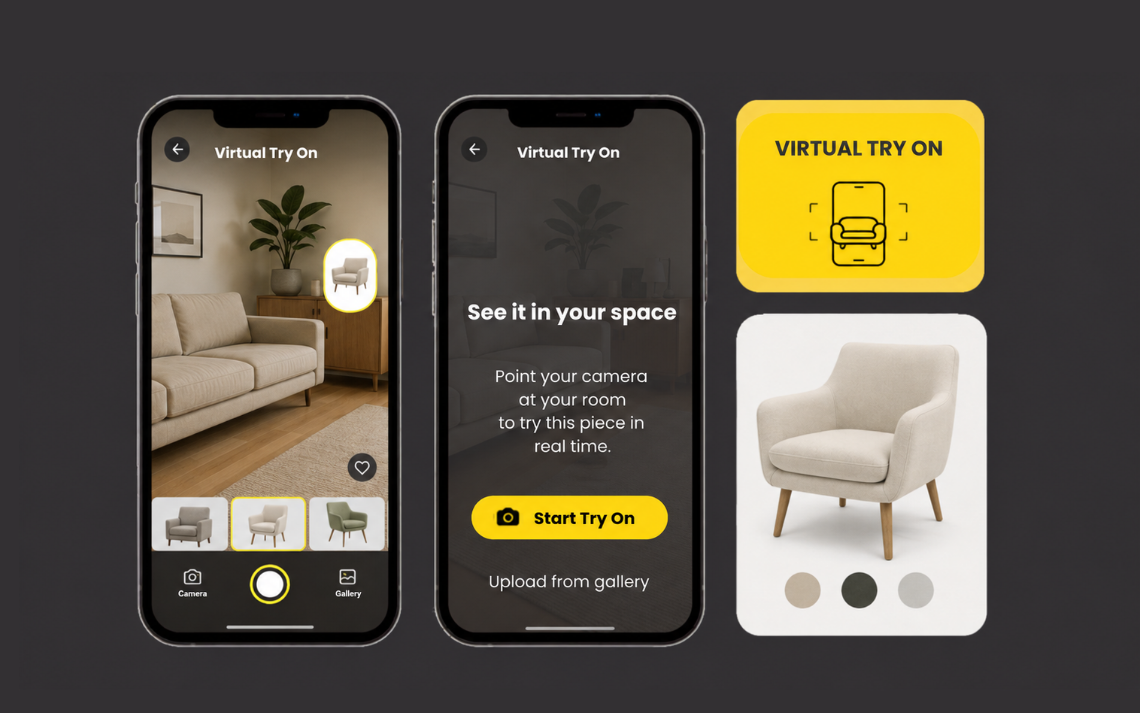
4) Virtual try-ons and AR: “Try Before You Buy” Era has Gone Digital
One of the biggest psychological barriers to buying online has always been the same nagging question: “Will it actually look right on me?” You can’t try on a jacket through a screen. You can’t see if that sofa will work in your living room from a product photo taken in someone else’s house. When the answer turns out to be “no, it doesn’t work” – the customer returns it, the brand absorbs the cost, and everyone loses.
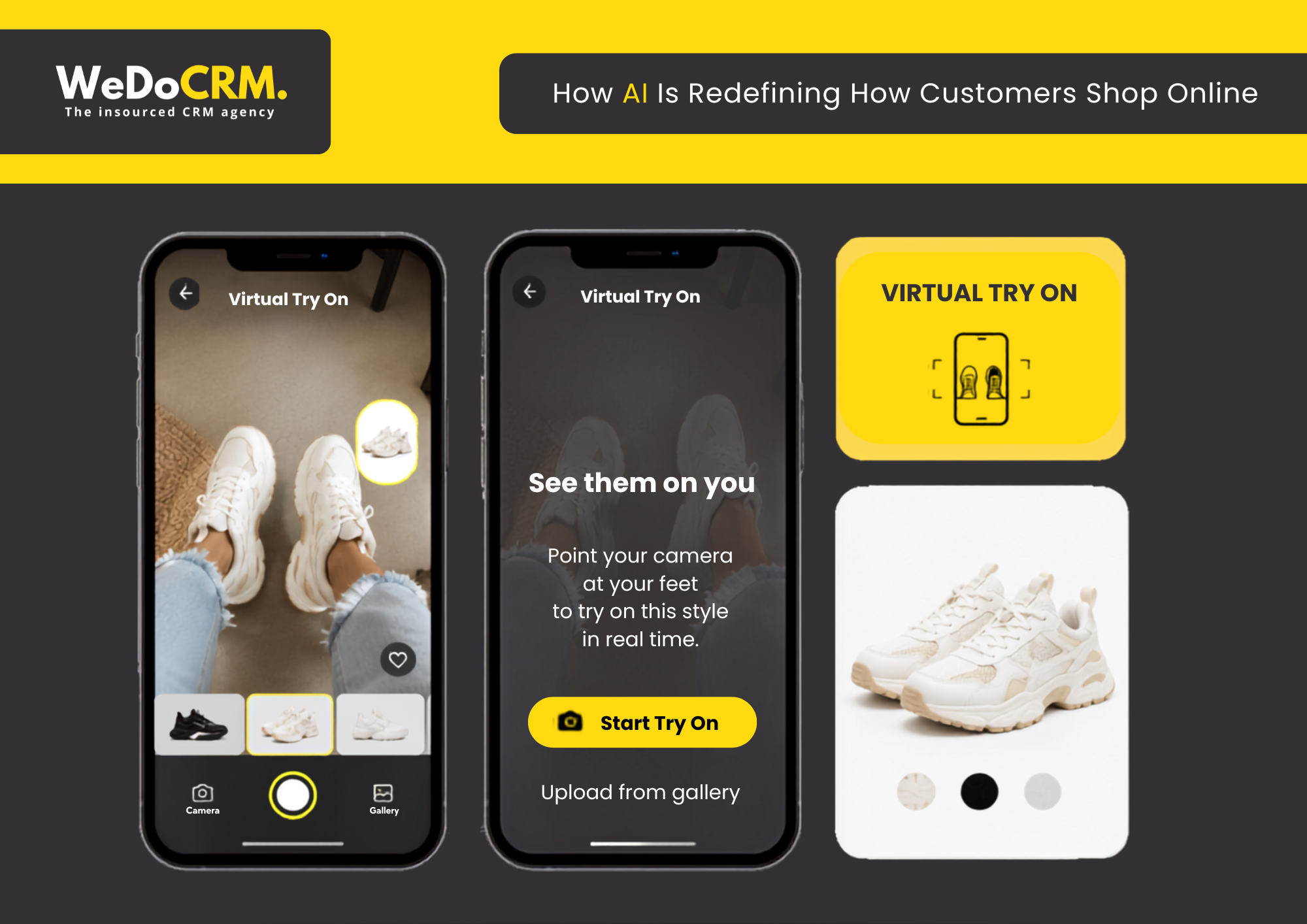
AI combined with augmented reality is fixing that. Point your phone camera at your face and see exactly how those glasses sit on your nose. Drop a virtual sofa into your living room before you spend £1,200 on it. Try on twenty shades of foundation without touching a tester. AI is closing the BIGGEST gap between digital and physical retail.
AI combined with AR is fixing that – and the case studies back it up:
- Ulta Beauty’s Snapchat AR makeup lens drove 30 million try-ons and $6 million in sales in two weeks. (Marketing Dive)
- L’Oréal’s ModiFace lifted conversions 72% and time-on-page 117%. (The Drum)
- IKEA’s “Place” feature delivered a 189% conversion lift, a 20% drop in returns, and sessions 3.5 times longer than standard browsing. (IKEA.com)
These aren’t pilot programmes anymore – they’re mainstream revenue drivers.
Bloomreach’s take:
“Visual search is just the beginning. The next evolution is what we call semantic and conversational search – where a shopper can type something like ‘something cosy for watching movies on the sofa, and the AI understands the intent behind the words, not just the keywords.”
5) AI-Powered Chatbots: Seamless Customer Service
We’ve all been there. You have a simple question – where’s my order, can I change the size, what’s the returns policy… and you’re met with a 45-minute queue and an automated system that keeps mishearing you. By the time you reach a human, you’ve already bought the same thing from a competitor.
Chatbots earned their bad reputation for good reason 52% of users still cite “bots misunderstanding my question” as their biggest frustration. But that’s not what the better platforms look like in 2026. Modern AI chatbots hold context across a full conversation, pull live order data, handle returns, answer sizing questions, and escalate to a human at exactly the right moment – without losing the thread.
Customers don’t care whether it’s a bot or a person, as long as their problem is solved quickly.
Download our Free Retail CRM Whitepaper
Ready to Make AI Work Smarter for Your Business?
AI is changing how customers discover, shop and buy – but technology alone isn’t enough.
Brands that get this right see it show up in the same three places, every time: higher repeat purchase rates, lower cost per acquisition, and a meaningfully smaller cart abandonment problem. The mechanics of how that works in practice are on our CRM strategy page – and if segmentation is where you want to start, our customer segmentation guide is worth a read.
At WeDoCRM, we help businesses turn customer data into meaningful engagement through CRM strategy, lifecycle marketing and automation. Together with Bloomreach, we’re helping brands combine powerful AI technology with practical expertise to create experiences customers genuinely value.
Want to learn more?
Explore our Bloomreach Partnership or get in touch with the WeDoCRM team to discuss how AI and CRM can support your growth.
FAQs: AI and Ecommerce
The most common questions about AI and ecommerce.
What is AI in ecommerce?
AI in ecommerce refers to the use of artificial intelligence to automate, personalise, and optimise customer experiences – from product recommendations to chatbots to marketing automation.
Why do online stores keep recommending things I already bought?
This usually means the recommendation engine is using basic “customers also bought” logic rather than more advanced AI that tracks intent – better systems learn from what you’ve dismissed or ignored, not just what you’ve clicked.
Does AI actually increase ecommerce sales?
Yes. AI improves conversion rates by delivering more relevant experiences, reducing friction, and targeting customers with the right message at the right time. Personalisation alone can significantly increase average order value and retention.
What is the future of AI in ecommerce?
More advanced personalisation, predictive and proactive marketing, AI-driven customer journeys, and voice and visual search becoming standard rather than novel.
Is visual search only useful for fashion and beauty brands?
No, though it has the biggest impact there. Homeware, furniture, and DIY brands see strong results too, since customers in these categories often can’t describe what they want in words but can recognise it instantly in an image.
Want more insights? Check out:
- Holiday CRM Insights for Personalised Marketing
- Why WhatsApp Marketing is Powerful – Check out other ways to do marketing
- Inside HubSpot’s AI Strategy 2026 – Take a look at the rise of their AI tool Breeze
- How AI is Transforming the future of CRM – Learn more about AI and CRM